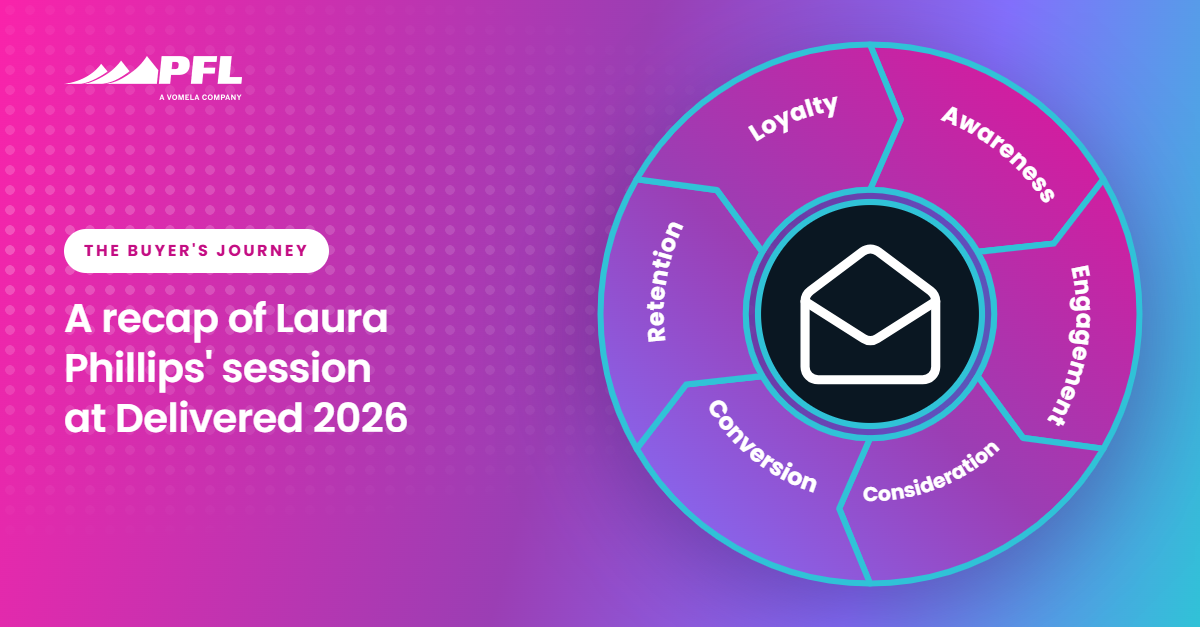

The Universal "Buyer’s Guide" Framework

This playbook combines an evergreen, industry-agnostic foundation with modular industry-specific pages that allow marketers to tailor messaging without reinventing strategy or structure.
Part I: The Universal Buyer’s Guide Framework
1. Why Direct Mail Buyer’s Guides Work
Buyer’s Guides are one of the most effective direct mail solutions when audiences are faced with complex choices, unfamiliar terminology, or high-stakes decisions. Unlike promotional mail, Buyer’s Guides are designed to educate first and convert later.
Curiously, physical formats slow the decision process in a productive way. They create space and time for clarity, comprehension, and trust—three factors that digital-only experiences often struggle to deliver. Well-designed Buyer’s Guides consistently outperform short-form mail when the goal is confidence-building rather than impulse.

2. When to Use a Buyer’s Guide
Buyer’s Guides are most effective when decisions are not obvious or immediate. They perform best in those moments when customers need help understanding options, comparing solutions, or navigating next steps.
Common triggers include:
• Multiple products, plans, or services
• Regulated or compliance-heavy environments
• Long or multi-stakeholder buying cycles
• Onboarding, enrollment, or renewal moments
• Product expansion or re-engagement opportunities
Across the customer lifecycle, Buyer’s Guides can support early education, mid-funnel consideration, onboarding, and long-term relationship building.
3. Choosing the Right Format
Selecting the right format is critical to the success of a Buyer’s Guide. The format should reflect the complexity of the decision, the depth of content required, and the value of the offer.
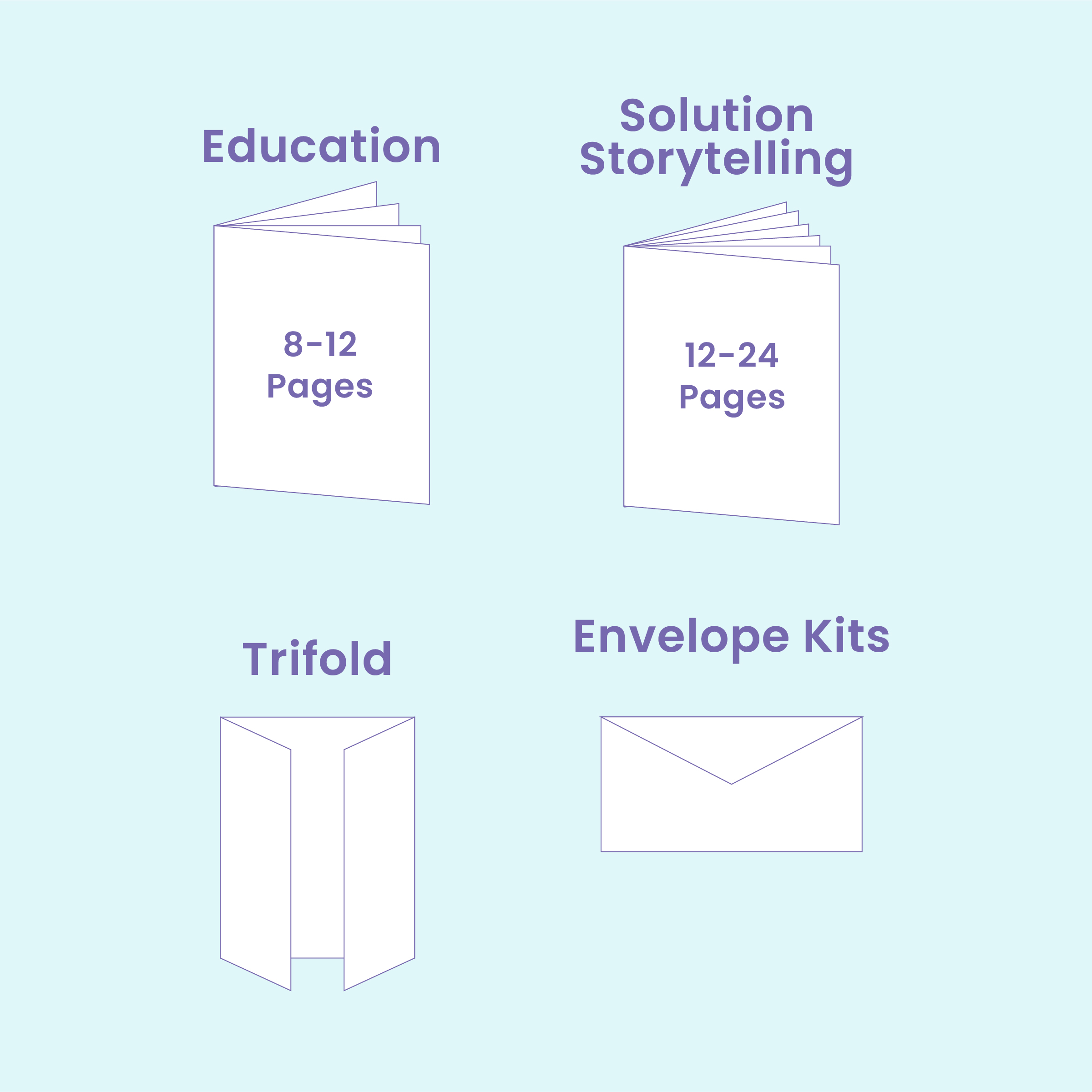
Common formats include:
• 8 - 12 page booklets for focused education.
• 12 - 24 page catalogs for broader solution storytelling.
• Trifold or gatefold self-mailers for concise guidance.
• Envelope-based kits for high-touch experiences.
When choosing a format, consider audience size, personalization needs, budget, timeline, and postage efficiency. Larger formats often outperform smaller ones when education is the primary goal, while self-mailers can be effective when speed and visibility matter most.
4. The Buyer’s Guide Content Framework
A successful Buyer’s Guide follows a clear, repeatable structure that guides readers from context to confidence.
Recommended flow:
1. Welcome and Context—Why the guide exists.
2. The Audience Challenge—Framed in customer language.
3. Solution Overview—Clear, plain-English explanations.
4. Options and Comparisons—Visual tables and summaries.
5. What to Look for—Decision-criteria checklist.
6. Proof and Validation—Case study, testimonial, or data point.
7. Next Steps—Clear call to action (CTA) supported by QR or digital bridge.
The design should make it easy to scan, while prioritizing white space and visual hierarchy to encourage engagement.
5. Personalization and Connected Experiences
Personalization enhances relevance and helps Buyer’s Guides feel intentional rather than generic. Even light personalization—such as tailored introductions or segment-based CTAs—can significantly increase engagement.
Connected experiences extend the value of the printed guide. QR codes, personalized URLs, and AI-assisted summaries allow recipients to continue their journey digitally, access demos, compare options, or schedule next steps.
6. Multi-Touch Extensions
Buyer’s Guides are most powerful when used as part of a multi-touch journey. They can anchor a sequence that reinforces messaging and guides recipients toward action.
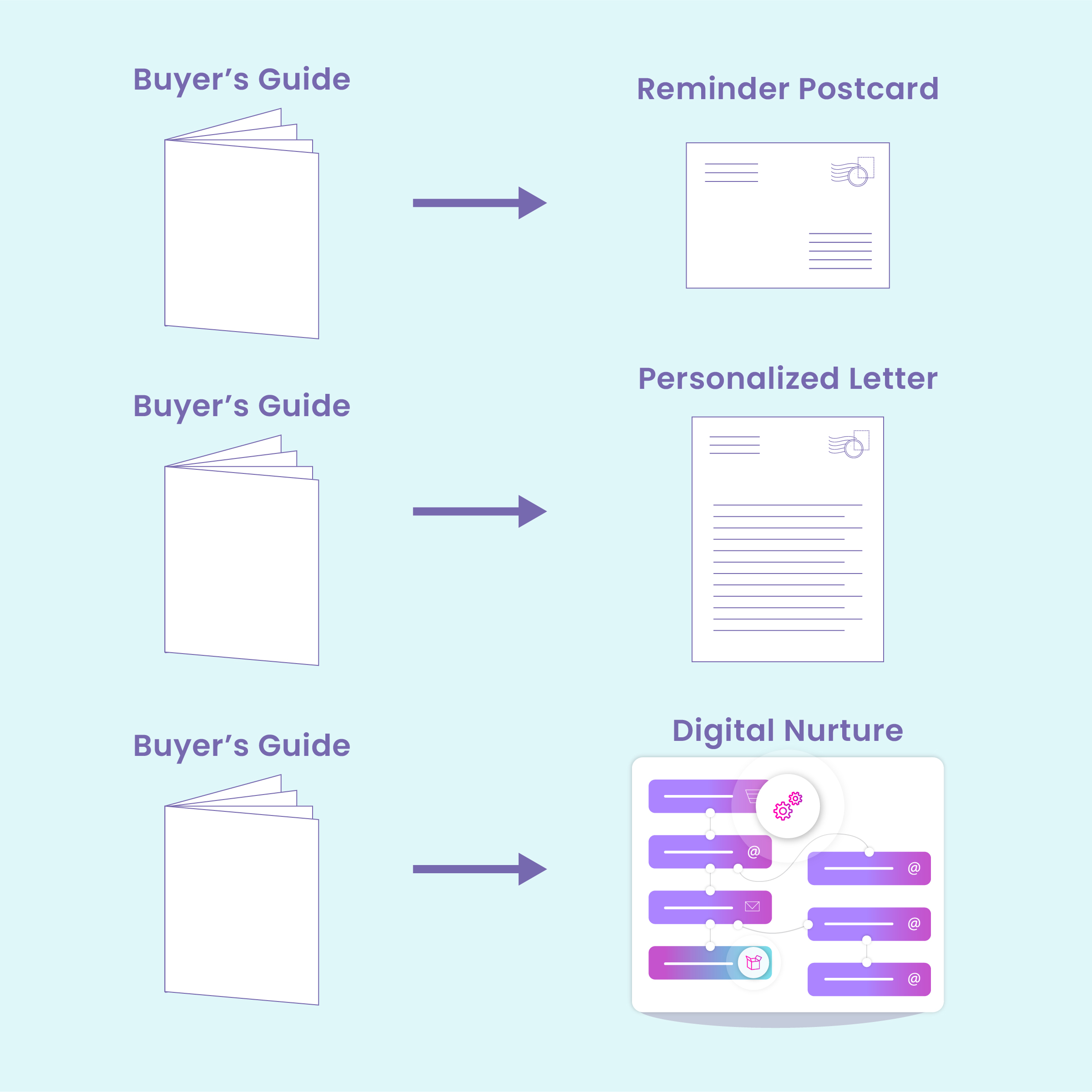
Common extensions include:
• Buyer’s Guide followed by a reminder postcard.
• Buyer’s Guide followed by a personalized letter.
• Buyer’s Guide triggering a digital nurture or sales outreach.
These journeys can support acquisition, onboarding, re-engagement, or expansion efforts.
7. Measurement and Optimization
Measurement ensures that Buyer’s Guides remain accountable and continuously improve.
Key metrics include:
• QR scans by section or CTA
• Landing page engagement
• Conversion actions, such as scheduling or enrollment
• Performance by segment or industry
Optimization opportunities include testing page count, CTA placement, format type, and timing between touches.
8. Production Planning
Successful Buyer’s Guides require thoughtful production planning. Teams should align early on creative timelines, data readiness, finishing requirements, and mail-drop schedules.
Clear planning reduces delays, manages expectations, and ensures a seamless experience from concept to mailbox.
9. Templates and Tools
To make execution easier, Buyer’s Guides should be supported by practical tools, including:
• A fillable content outline
• Format selection worksheets
• CTA planning guides
• AI prompt libraries
• Multi-touch journey planners
In a marketing landscape increasingly defined by speed and noise, Buyer’s Guides stand out by doing the opposite: creating space for informed choice, meaningful engagement, and long-term relationship building—one mailbox at a time.
Part II: Industry-Specific Applications
The following pages layer industry relevance onto the universal Buyer’s Guide framework. Each page highlights common challenges, recommended formats, and messaging guidance to help teams tailor execution without changing strategy.

Financial Services
Financial decisions require trust, clarity, and confidence. Buyer’s Guides help simplify complex products while reinforcing credibility.
Use cases include:
• Commercial banking solution guides
• Wealth management overviews
• Lending portfolios
• Client onboarding materials.
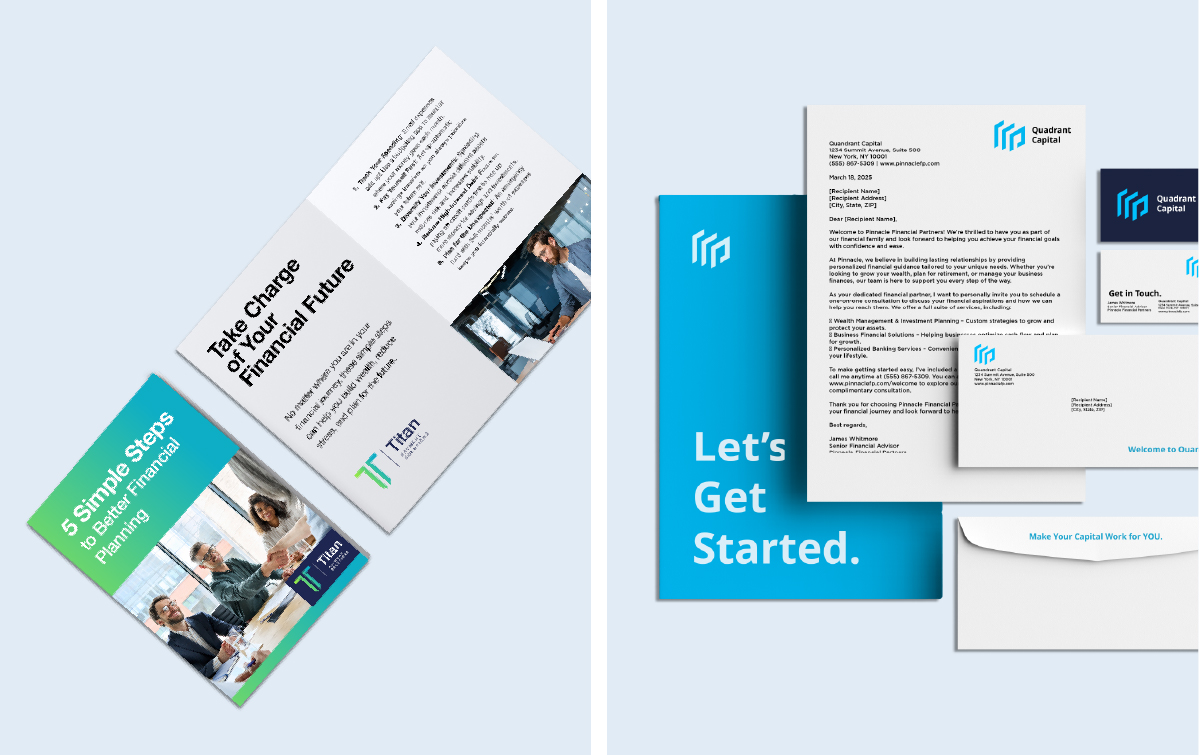
Recommended formats include 12 – 24 page booklets or catalogs with structured comparisons.
CTAs often focus on consultations, solution exploration, or relationship reviews.
Download an example of a Buyer's Guide for Financial Services.
Healthcare
Healthcare audiences face complex, regulated decisions that benefit from clear, well-organized education.
Buyer’s Guides are effective for:
• Benefits selection
• Provider navigation
• Member onboarding
• Enrollment support
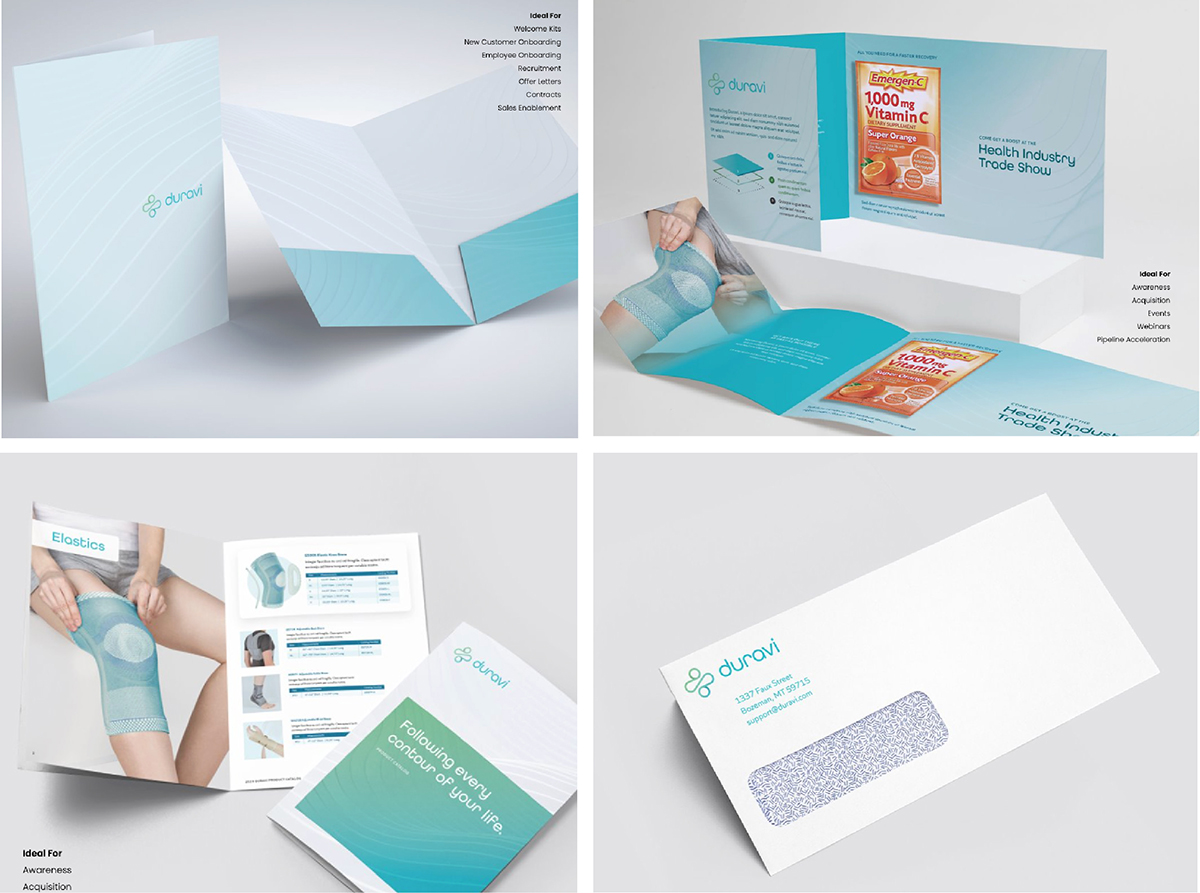
Formats should prioritize readability and reassurance, often using booklets or directories.
CTAs may include plan comparisons, care access tools, or enrollment actions.
Download an example of a Buyer's Guide for Healthcare.
Technology (B2B/SaaS)
Technology purchases often involve multiple stakeholders and technical complexity.
Buyer’s Guides help:
• Translate features into outcomes
• Support product launches
• ABM efforts
• Adoption campaigns
Recommended formats include concise booklets paired with digital demos.
CTAs typically drive demo requests, feature exploration, or strategy conversations.
Download an example of a Buyer's Guide for Technology companies.
Retail and Consumer Brands
Retail Buyer’s Guides emphasize storytelling, curation, and inspiration.

They work well for:
• Seasonal lookbooks
• Curated collections
• Loyalty programs
• Early-access campaigns
Visual formats such as catalogs and self-mailers perform strongly.
CTAs often focus on shopping, unlocking access, or discovering collections.
Download an example of a Buyer's Guide for Retail.
Conclusion
Buyer’s Guides work because they respect and enhance the way real decisions are made. They slow the process just enough to replace confusion with clarity and promotion with confidence. When thoughtfully designed, personalized, and connected to the broader customer journey, they become more than a piece of mail—they become a trusted reference that earns attention, builds understanding, and creates action. In a marketing landscape increasingly defined by speed and noise, Buyer’s Guides stand out by doing the opposite: creating space for informed choice, meaningful engagement, and long-term relationship building—one mailbox at a time.