Leveraging Direct Mail Throughout the Customer Lifecycle
This is where direct mail becomes “More Than Mail.”
This is where direct mail becomes “More Than Mail.”
Download PDF Version

Introduction
Marketing today requires more than just digital expertise. The fact is, best-practice organizations weave together both physical and virtual experiences. Modern, data-driven physical experiences can help you connect with prospects and customers more effectively; boost loyalty and brand value; and better address buyer needs throughout the customer lifecycle.
This is where direct mail becomes “More Than Mail.”
Mail is more than a postcard or a routine letter. It’s more than the coupon you receive from your favorite store, a monthly bank statement, or the note your insurance company sends on your birthday. Mail is more than sheets of folded paper in your mailbox or a package left on your doorstep.
Mail Can Be Art
Mail can be the beginning or continuation of a story. Mail can provide important information, or it can connect someone to valuable resources. Mail can educate, inform, entertain, and inspire—sometimes simultaneously. It can be a personal expression of appreciation or a way to comfort someone going through a difficult time. It can celebrate achievements and commemorate milestones. A piece of mail can occupy space in someone’s home or in a customer’s mailbox— all holding the promise of something extraordinary.
Sure, poorly done, direct mail can be impersonal, irrelevant, even junk. It can make you immediately look for the nearest recycling bin. Direct mail can be the bridge that connects your brand to your audience, driving engagement across the customer journey with memorable moments that extend beyond the mailbox.
With modern, automated direct mail, you can make every connection during the customer journey count. That is “More Than Mail."
Introducing 'More Than Mail'
“More Than Mail” is a bold challenge to the status quo of direct mail marketing. For too many, direct mail is synonymous with outdated, one-way communication that comes with complicated processes, a high cost, and an environmental toll. But, in reality, direct mail is a versatile, engaging, and dynamic force in modern marketing.
A Creative Fusion
Before getting into how it can be of value during the entire length and breadth of the customer lifecycle, it’s important to understand what direct mail is and isn’t. Modern direct mail is a creative fusion of tradition and innovation, making it a timeless medium in the digital age. It can captivate your audience, ignite conversations, and build lasting relationships. It offers the ability to experience the power of two-way engagements through personalized, interactive direct mail experiences, including QR codes, landing pages, etc.
“Modern direct mail is a creative fusion of tradition and innovation, making it a timeless medium in the digital age.”
When it comes to dollars, physical mail is extremely cost effective, offering strategies that maximize budgets while delivering exceptional results. By targeting mail to go to the right person at the right time, you can cut costs by sending less mail. What’s more, it’s easy to tap into digital data to craft tailored messages that resonate with each recipient. All of which makes direct mail not just relevant, but essential for driving results as part of your marketing mix and channels. In fact, according to recent research, 81 percent of recipients are likely to open a direct mail package, thereby increasing engagement.
What’s more, a study by the US Postal Service confirms that mail is welcomed into people’s homes and plays a unique and personal role in their daily lives (see sidebar, “The ‘Mail Moment’: Consumers Are Paying Attention.”)
And, as we are in a new era of direct mail, cutting-edge tracking and analytics provides keen insights into campaign performance. Lastly, but perhaps most important, is that PFL is committed to eco-responsibility, using sustainable printing and mailing practices that reduce the footprint of your campaigns.

The Customer Lifecycle
The “More Than Mail” approach, therefore, is one that empowers every marketer to transcend the expected and the forgettable. It’s a bridge between your brand and your audience, a catalyst for engagement, a force for change, and a way to make every connection with your audience throughout the customer lifecycle count.
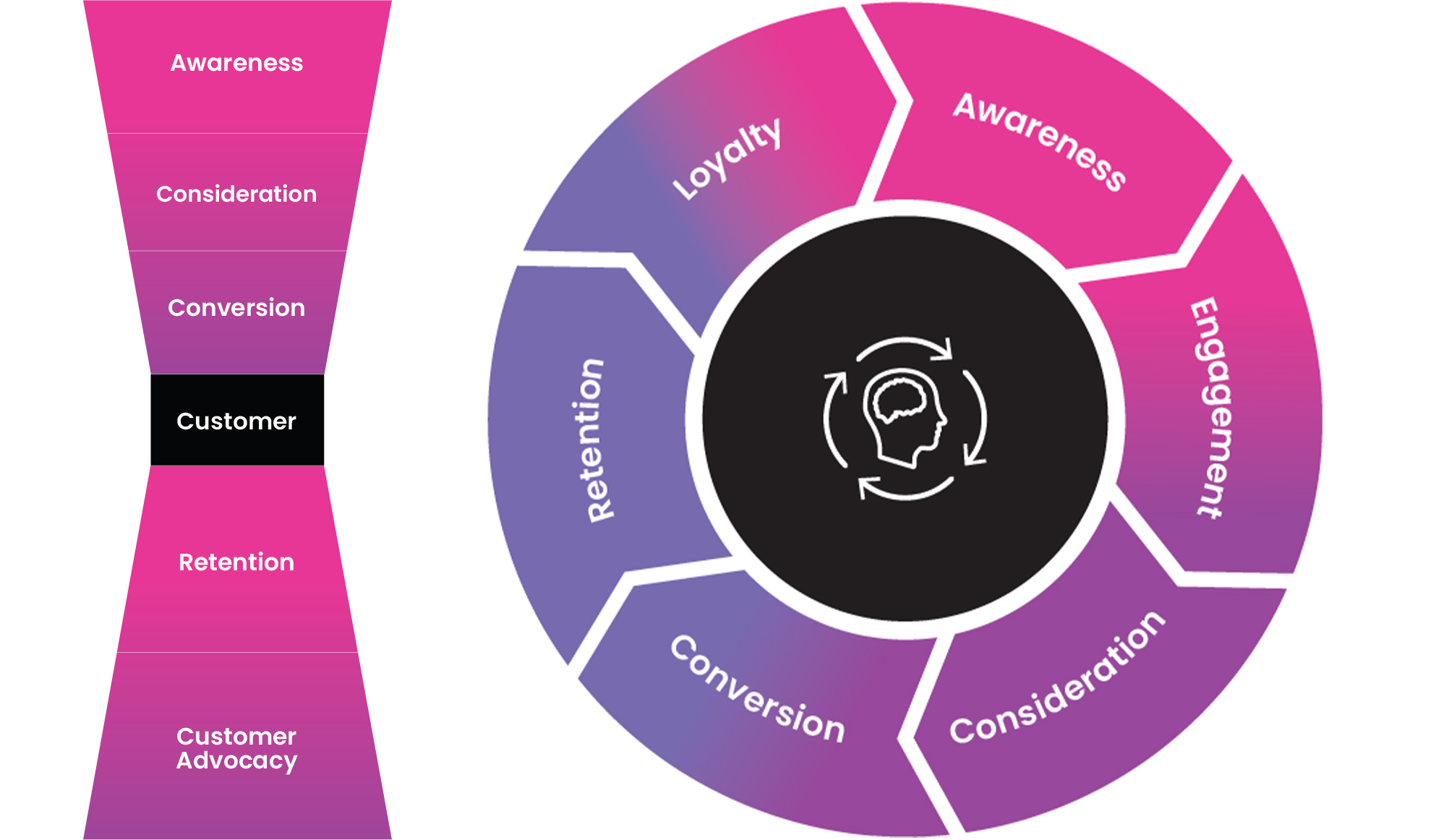
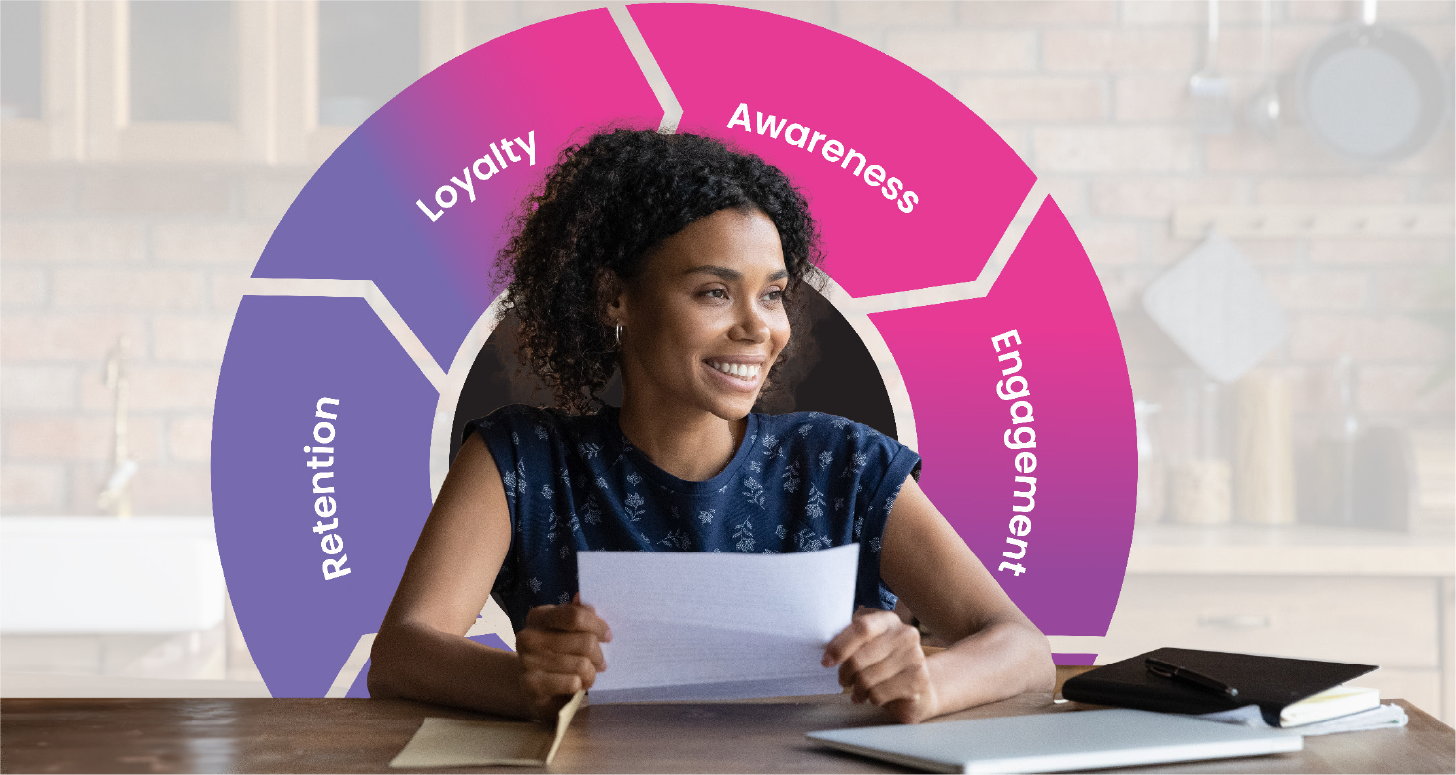
Direct mail can serve as a powerful tool across every stage of the customer lifecycle, and it all begins by identifying opportunities for improvement in customer experience areas and gaps that need to be filled.
In the Awareness stage, direct mail can grab attention effectively with physical, eye-catching materials that stand out and garner attention.
Engagement can be enhanced by fostering a deeper connection than is possible through digital means alone.
Direct mail can serve as a powerful tool across every stage of the customer lifecycle, and it all begins by identifying opportunities for improvement in customer experience areas and gaps that need to be filled.
During Consideration, personalized mail can deliver tailored messages, addressing specific pain points and needs, which can nudge prospects closer to a decision.
In Conversion, direct mail can provide a tangible call to action—such as coupons or samples—prompting immediate responses and driving conversions.
Retention efforts benefit from the physical nature of direct mail, reinforcing brand recall over time and encouraging repeat purchases.
Finally, in the Loyalty phase, targeted mailings can express appreciation to existing customers, strengthening bonds, and encouraging positive reviews and referrals, ultimately fostering brand loyalty. Through each touchpoint, direct mail leverages its unique qualities to complement and enhance the customer journey, resulting in more meaningful interactions and improved outcomes.
Creating Powerful Moments
In the end though, the “More Than Mail” adventure is all about fashioning powerful and memorable experiences for your customers and prospects. Creating powerful moments was examined in detail last year in our e-book, “PFL’s Essential Guide to: Creating Powerful Direct Mail Moments Across the Customer Lifecycle.”
Coming to Life
No matter where the customer is in the journey—from reading a blog or attending an event (awareness) to becoming a true brand advocate (loyalty)—it’s necessary to include one or more of the following elements to make the “More Than Mail” scenario come to life:
Elevation:
These interactions supercharge brand recall and facilitate a smoother customer journey. They are experiences that rise above the routine and make customers and prospects feel engaged and motivated.
Insight:
Creating “insight” brings those “aha moments” to the recipients. “Moments of insight” deliver realizations and transformations that can cause people to trip over the truth. These “aha moments” can make people believers and get them to act.
Connection:
Email and text have become the main forms of communication for many—especially in business. People want personal contact to experience shared meaning. We also all want to feel acknowledged and recognized for the things we accomplish.
Celebration:
We have explored some of the myriad reasons why acknowledging and celebrating customers and prospects is crucial for businesses that want to thrive in today’s competitive landscape.

A Lifecycle of Plays
So, let’s delve a little deeper into each stage of the customer lifecycle and see exactly how direct mail can significantly impact prospects and customers at each stage:
1 Awareness
Direct mail stands out in a cluttered digital environment by offering innovative designs, textures, and formats that can captivate recipients’ attention, making your brand memorable right from the start. Better awareness can lead to a 20 to 30 percent increase in engagement. That’s why a great first impression is an essential beginning step.
Best-practice programs weave in high-impact, low-cost print materials at the top of the funnel. What’s more, organizations are now able to create moments of elevation in their messaging, while introducing true moments of insight for prospects. For instance, a creatively designed postcard or a well-crafted brochure can pique curiosity and initiate the customer journey effectively.
1A Introduce Yourself
Try this: There are many plays you can run to create awareness. One example is the “Introduce Yourself” play. Once you’ve defined your target audience, trigger interactive mail with a trackable QR code. Once your contact has engaged, and an email address is collected, drop the prospect into a nurture campaign.

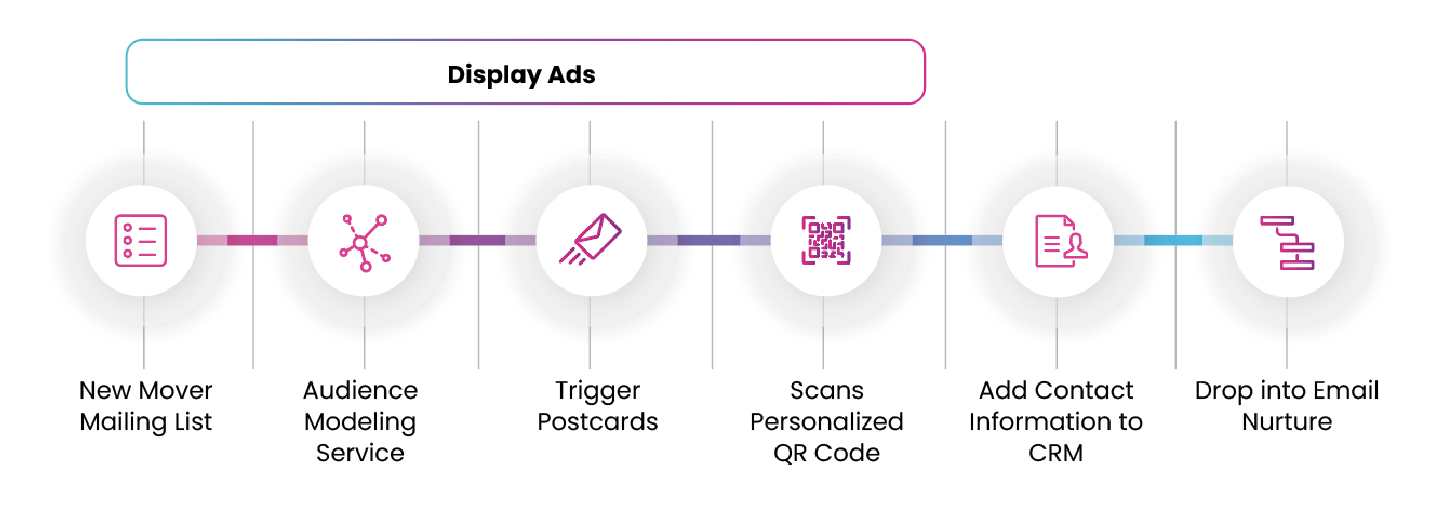
1B New Movers
Try this: Spread awareness to new movers in your service area by triggering postcards with location and service information. Optimize ROI by leveraging PFL’s Audience Modeling Services to score contacts based on their propensity to convert. Once the contact engages, add them to your CRM and drop them into a nurture campaign.
2 Engagement
The physical nature of direct mail fosters a deeper connection than do digital channels. Recipients are more likely to spend time engaging with mail, flipping through pages, and examining content. This hands-on experience creates a stronger emotional connection, leading to better brand recall and message retention. For example, interactive elements such as QR codes, augmented reality, or video can further enhance engagement.
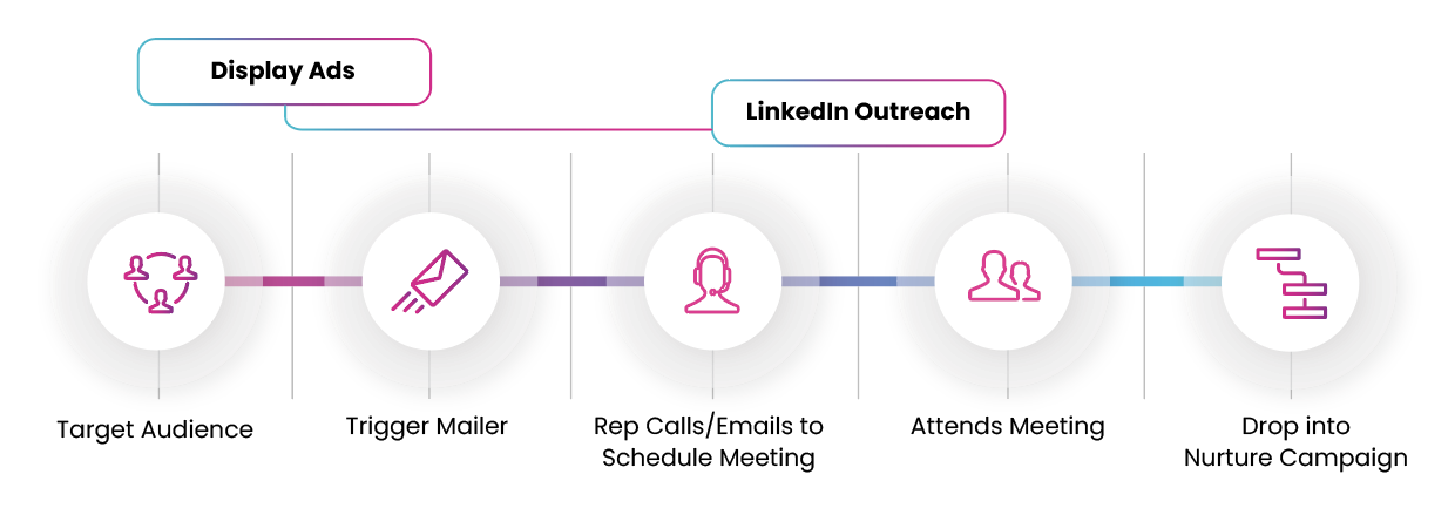
2A Thought Leadership
Try this: Thought leadership positions your brand as a subject matter expert— innovative, smart, and helpful. Use this play to send a book, industry report, or whitepaper with a personalized note to your target audience. If it can address a known pain point, all the better. Increase the funnel velocity by notifying sales reps to call and email the contact at the exact moment the package is delivered.
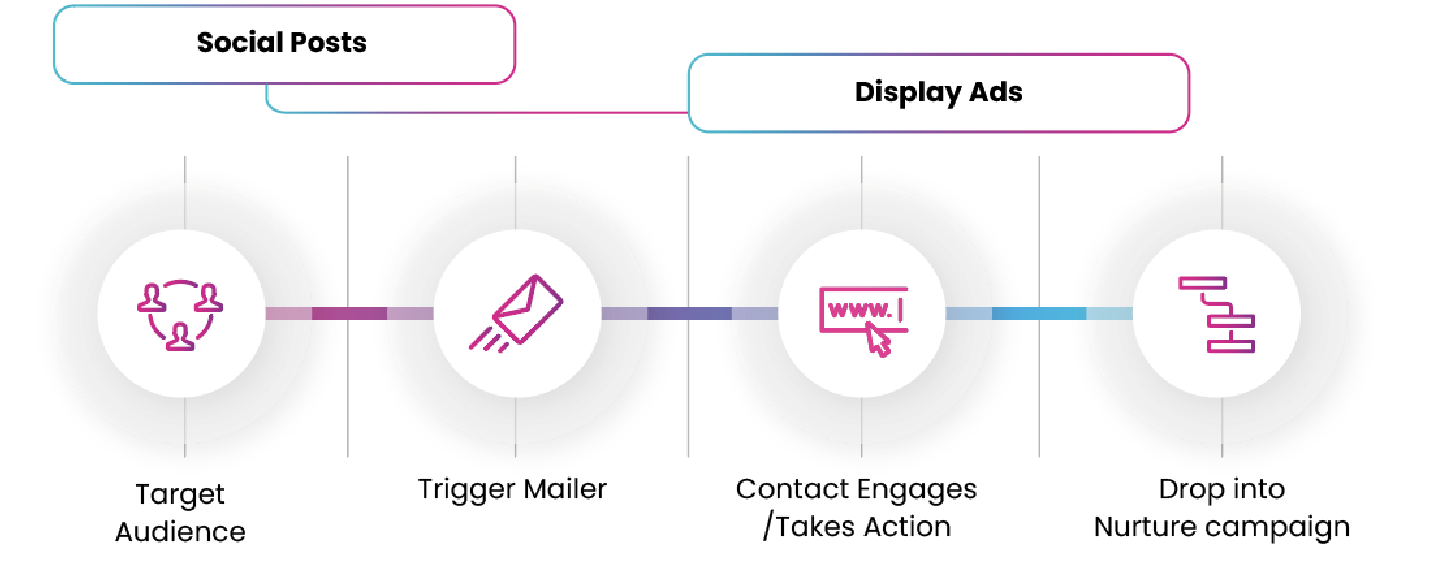
2B Did You Know? / Pro Tips
Try this: Providing helpful insight positions your brand as a subject matter expert and goto source for information. Use this play to provide relevant tips and ideas to your audience, and direct them to your website to learn more on a particular topic. If they visit your site, invite them to subscribe to your newsletter, follow you on social media, or download an ebook so they don’t miss out on more pro tips and insights from your company.
3 Consideration
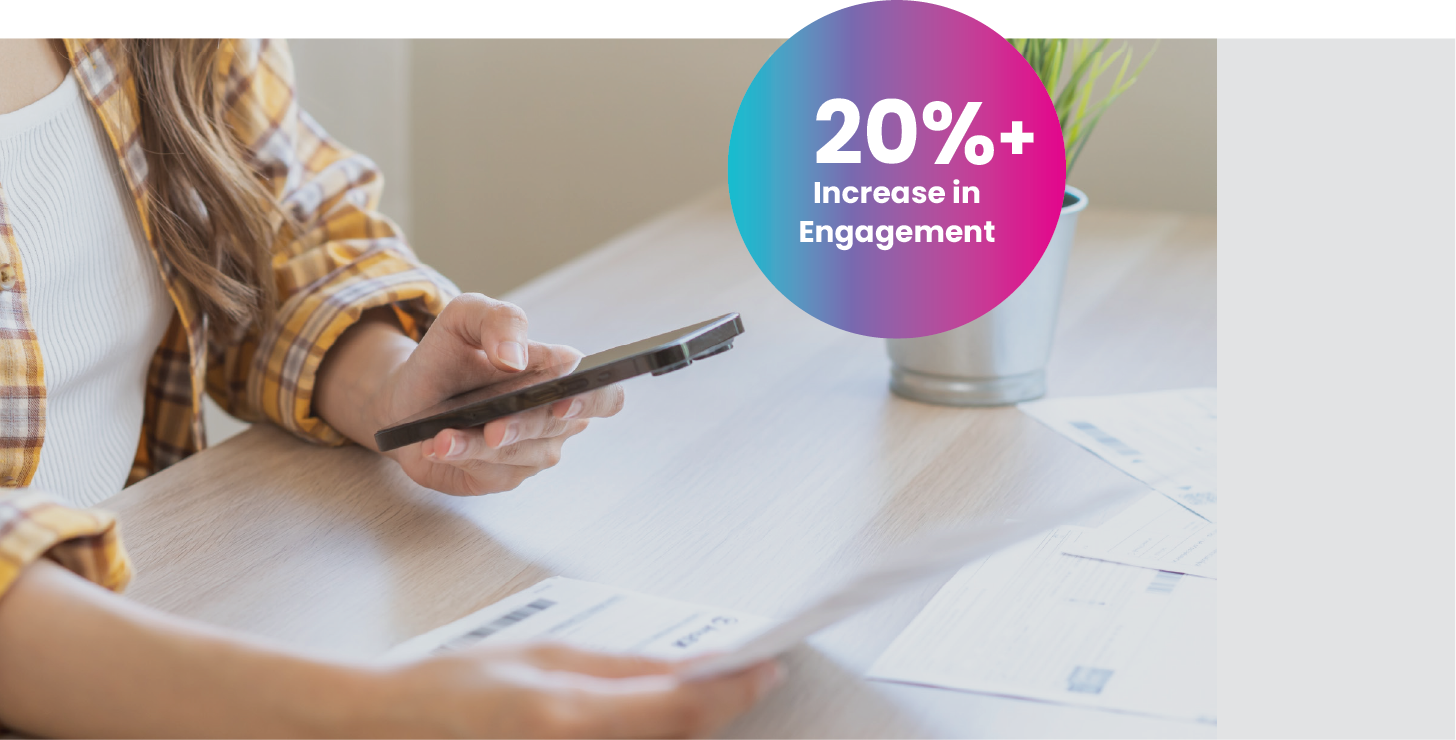
Personalization is key during the consideration stage, and direct mail offers ample opportunities for tailored communication. By leveraging customer data and segmentation, marketers can create highly relevant mailings that address individual preferences, pain points, and aspirations. Personalized mailings can significantly influence purchase decisions and move prospects closer to conversion.
Industry leaders understand that success in the consideration stage takes educating, nurturing, and re-engaging prospects who show interest in a brand. Nothing aids in this task more than educational mailers or samples that show what a product or service is and what it can do. By tapping into moments of insight and connection, marketers can transform their efforts. Organizations that include direct mail in the consideration stage typically see a 20 to 30 percent spike in engagement.
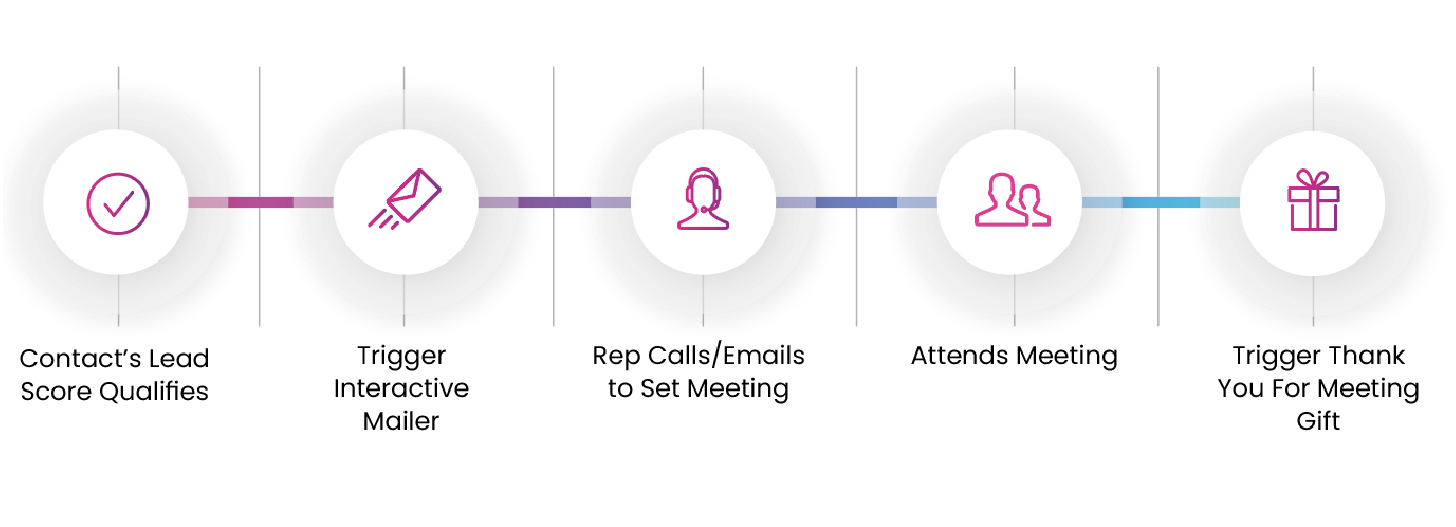
3A Meeting Maker
Try this: For the contacts that show engagement by clicking links, downloading content, or registering for events, it’s time to ask for a meeting. You can do this a couple of ways. One option is to send a low-cost interactive mailer with an incentive to take the meeting. Another option is to send a mid-tier, dimensional mailer that creates a memorable moment of surprise and delight for the contact, so they are eager to book a meeting.
3B Nurture
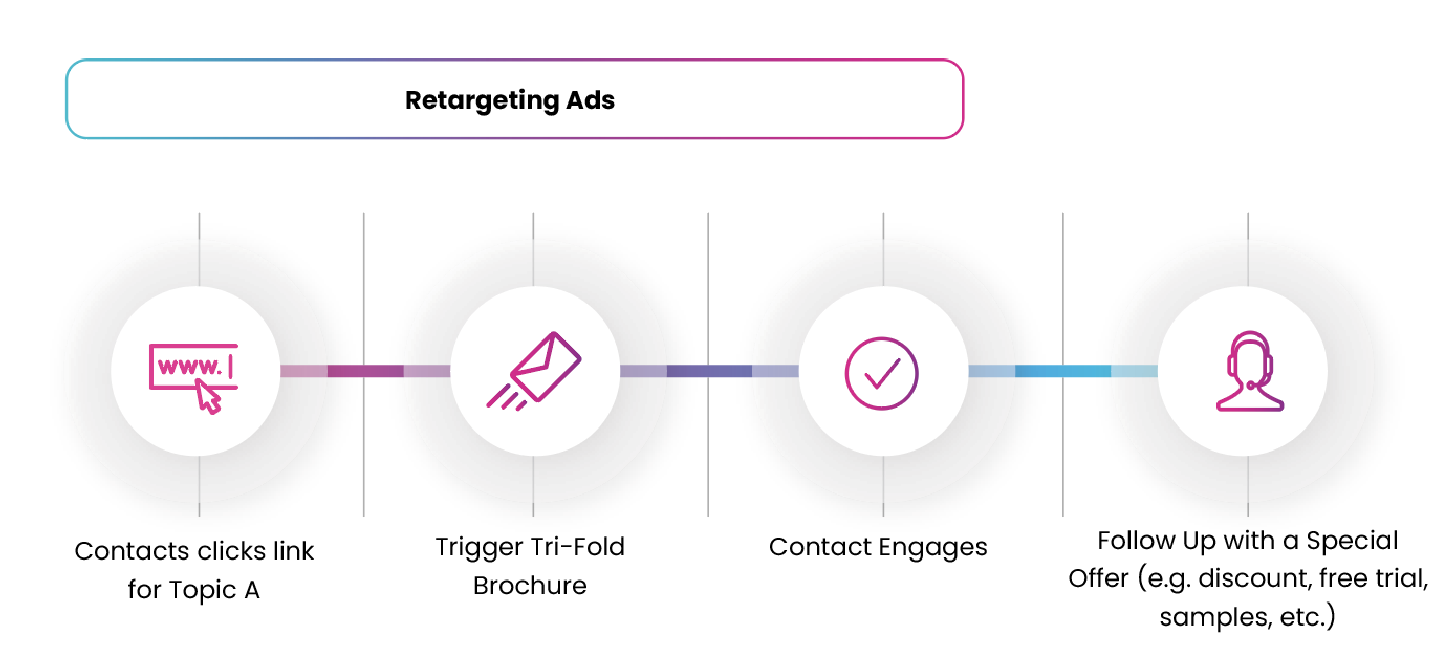
Try this: Send timely, relevant content by inserting links to your brand topics within your email nurture campaign. When a prospect engages digitally with a specific topic, trigger informational print collateral, such as a booklet or a tri-fold brochure, that relates to that topic.
4 Conversion
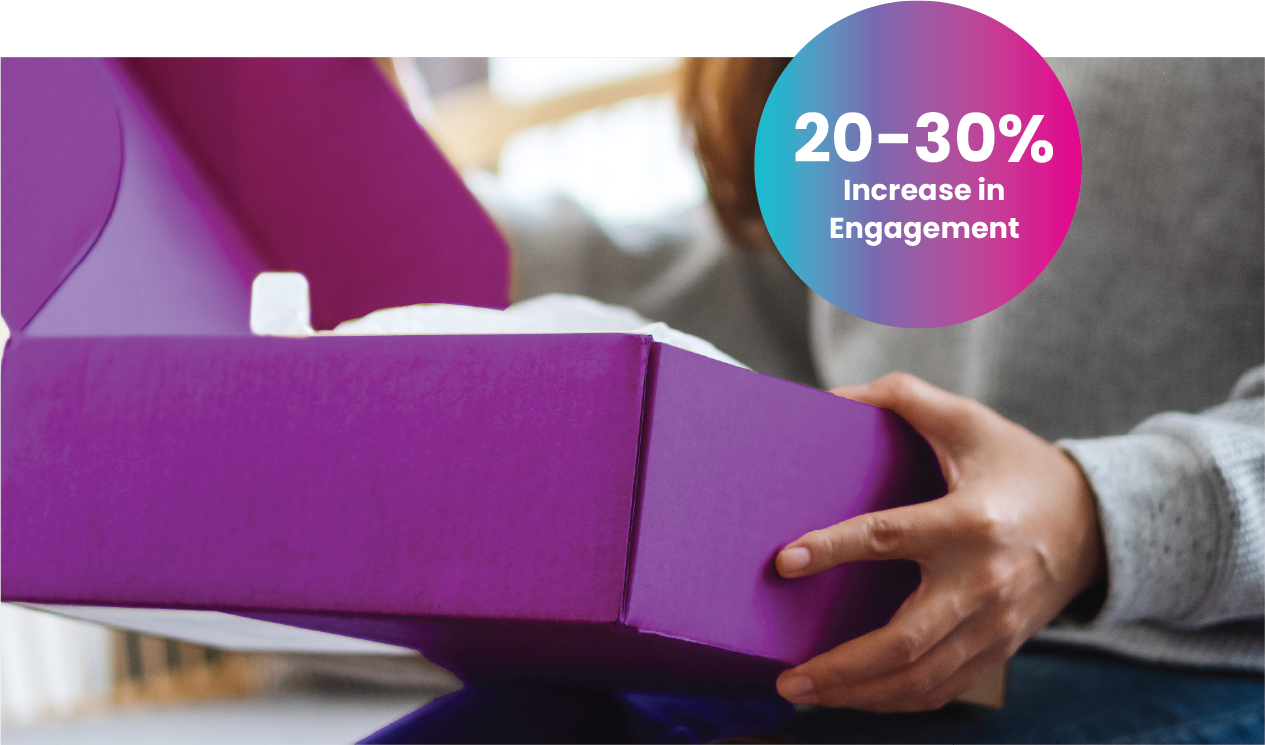
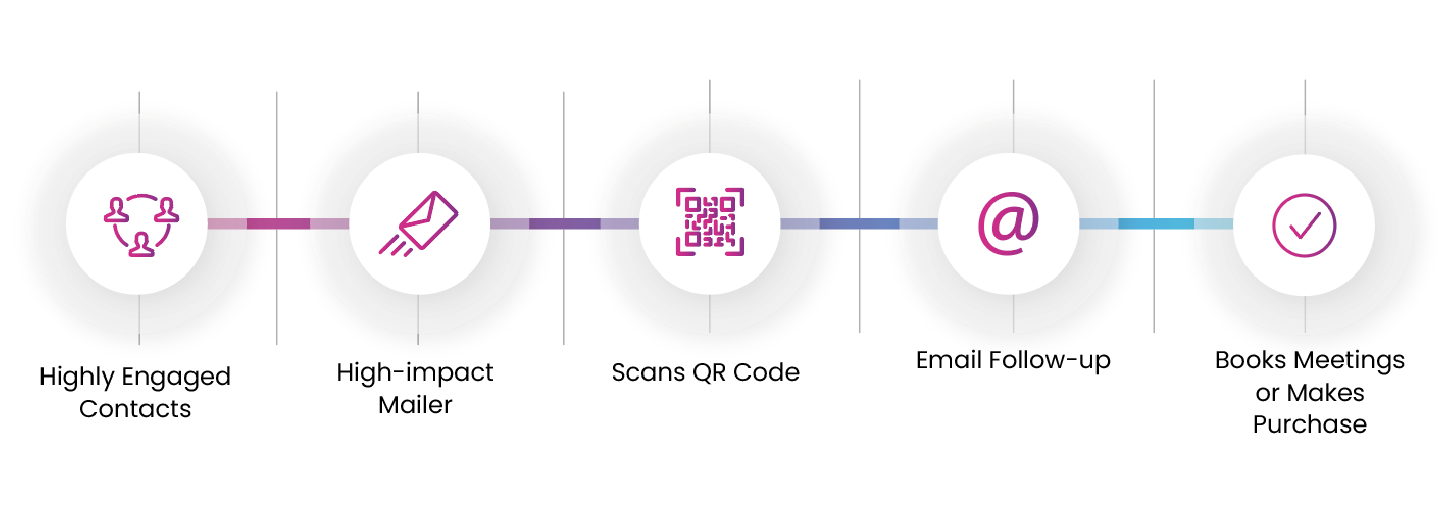
Direct mail is a powerful driver of conversions by delivering purchase-oriented calls to action. Including incentives such as coupons, free samples, or limited-time offers invites recipients to respond immediately. Additionally, integrating direct mail with digital channels through personalized URLs (PURLs) or QR codes enables seamless online conversions, tracking, and attribution, maximizing the effectiveness of marketing campaigns.
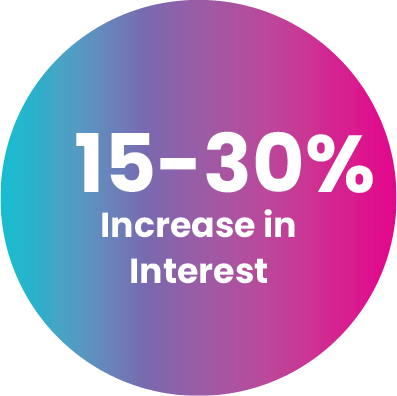
Organizations that succeed in converting a high percentage of prospects to customers typically focus on addressing pain points and delivering incentives to act, including offering free trials, discounts, recognition, and gifts. Creating moments of connection and elevation can help marketers achieve breakthrough results. Organizations that develop effective conversion methods see a 15 to 30 percent boost in interest.
4A Sales Acceleration
Try this: Here’s a “Sales Acceleration” play that creates urgency to accelerate deals by sending sales qualified leads (SQLs) a high-impact mail er that contains a gift and a piece of content, such as a buying guide. After the prospect hits the SQL stage, trigger an email thanking them for the meeting and letting them know “something’s in the mail.” After the package has been delivered, notify sales reps to call and follow-up. Finally, drop contacts into an email nurture, with a continued cadence of follow-up calls and social engagement.
4B Abandoned Cart
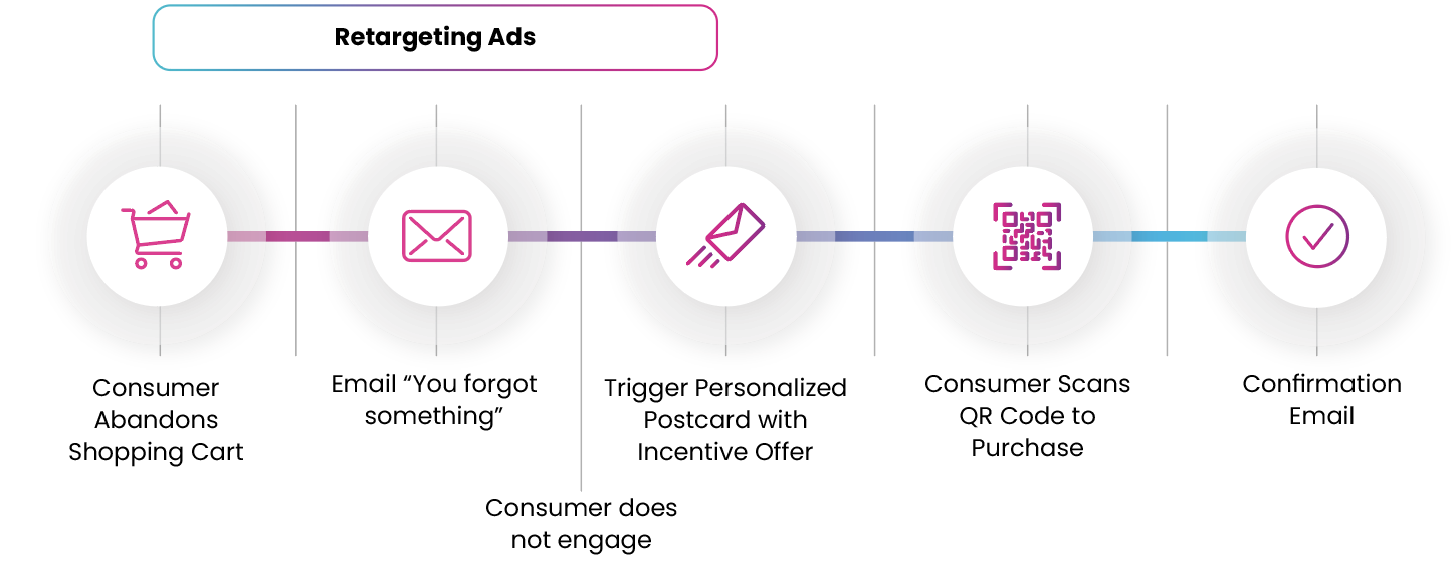
Try this: Accelerate the sales cycle and entice unengaged customers who have abandoned their shopping cart by using intelligent personalization to map images of the products in their cart to a postcard. Trigger the postcard if the customer hasn’t engaged with your digital outreach. Use a trackable QR code for an incentive offer that directs the customer to finish checking out.
5 Retention
The physical nature of direct mail creates a sensory experience that leaves a lasting impression on recipients. Unlike transitory digital ads, physical mailings have a longer shelf life, often occupying physical space in homes or offices and serving as constant reminders of the brand. Sending a personalized thank-you note or exclusive offers to existing customers strengthens relationships and increases share of wallet and leads to higher customer retention.
What does best-practice customer retention look like? Key experiences include moments of connection, elevation, and celebration. An organization must re-engage on the customer’s terms, acknowledge key personal or professional milestones and achievements, offer the right incentives, and engage in other activities that enhance the relationship.
5A Customer Retention
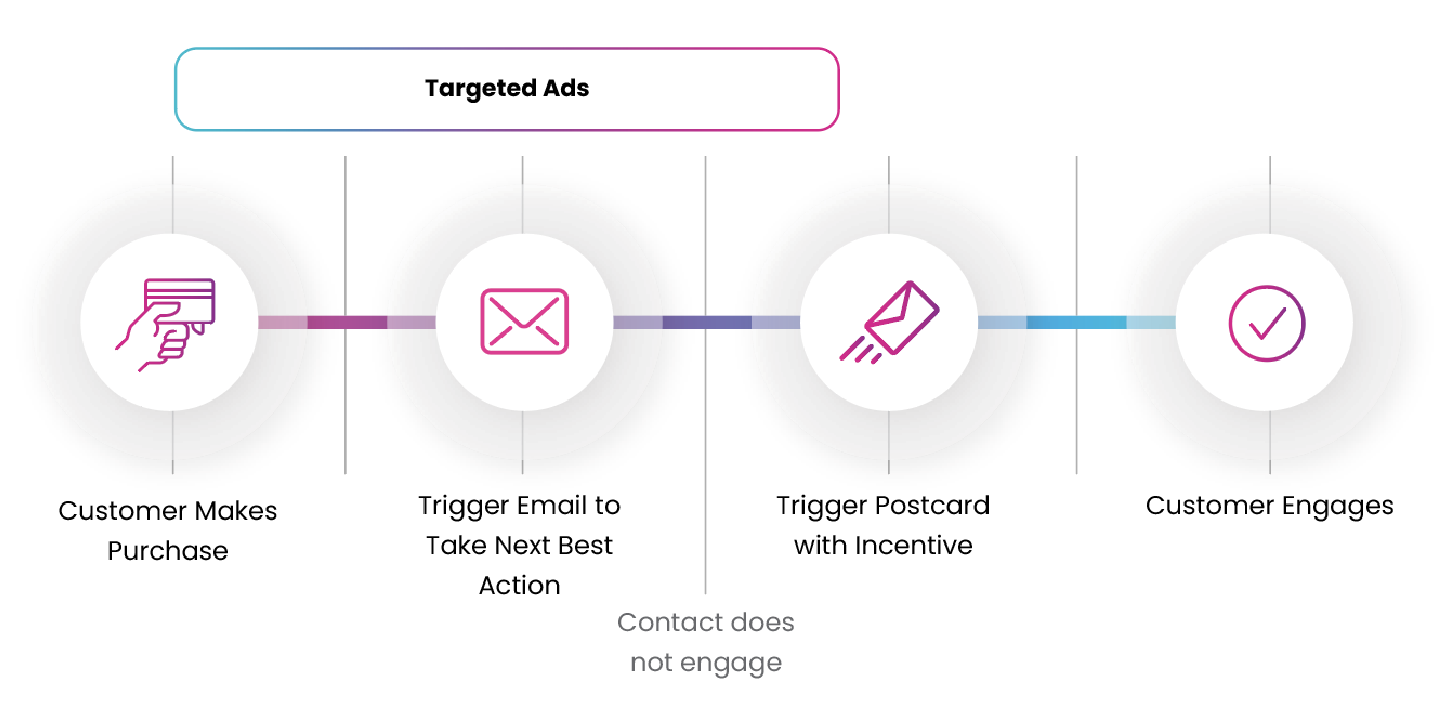
Try this: It’s much easier to retain a customer than to find a new one. Use PFL technology to trigger timely, personalized incentive offers to increase app downloads, in-store visits, or repeat purchases. Once a customer makes a purchase, use digital retargeting ads and promotional offers to get them to engage again. For consumers who are not responding digitally, trigger a postcard with a limited-time offer to increase conversion.
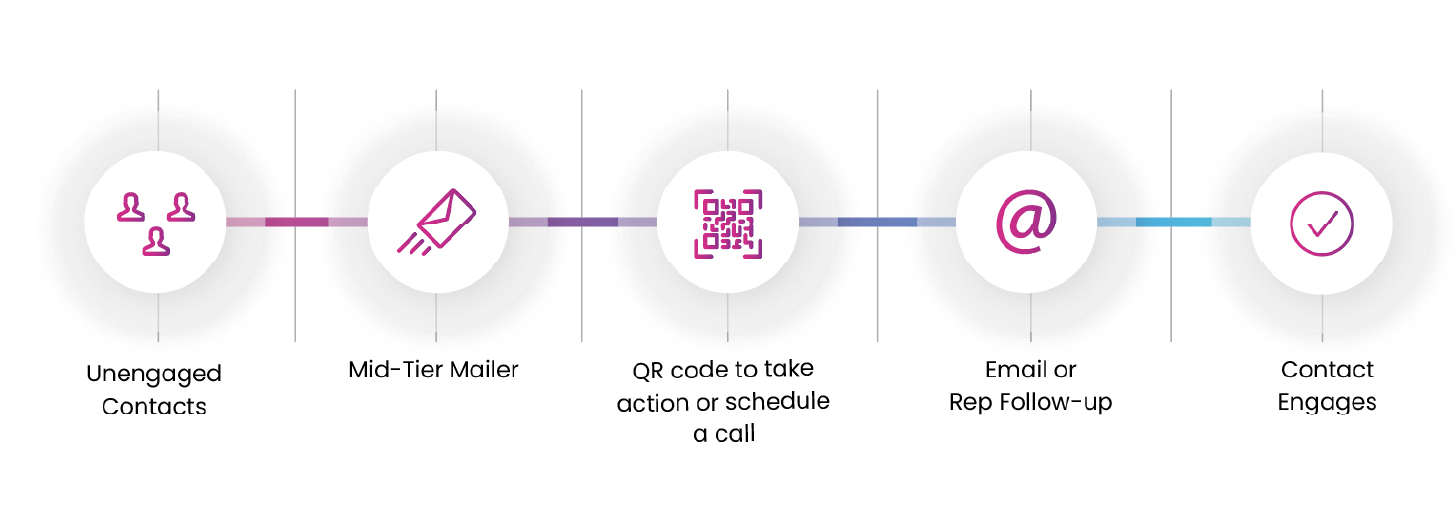
5B Re-engagement
Try this: The “Re-Engagement” play increases engagement and adoption for your brand by sending a physical mailer to customers who have been non-responsive. Trigger a mid-tier mailer and send a notification task to reps to follow-up via email and phone once the package has been delivered.
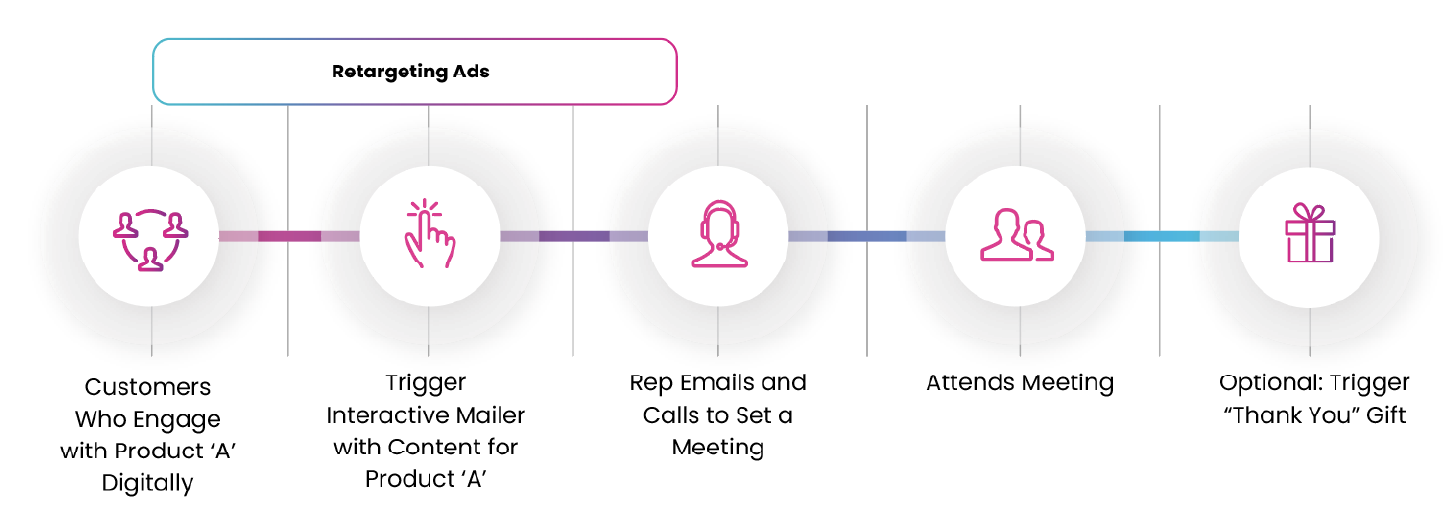
5C Upsell / Cross-sell
Try this: Trigger an interactive mailer to incentivize customers who have shown interest in your other products or services to book a meeting. Incentives could be things such as receiving a more expensive gift for taking a meeting or a getting a discount on a particular product or service of interest.
6 Loyalty
Targeted mailings play a crucial role in nurturing and retaining loyal customers. By segmenting the customer base and sending relevant content and offers, brands can demonstrate appreciation and value to their most valuable customers. Creating loyal customer advocates requires a focus on moments involving connection, elevation, and celebration.
This can take many forms that span the digital and physical realms, including direct appreciation and acknowledgement, rewards related to referrals or references, soliciting reviews from loyal customers, conducting surveys, and doing product beta testing. Exclusive invitations to events, early access to new products, or personalized anniversary or birthday gifts can also all solidify loyalty and turn customers into active brand advocates loyal customers.
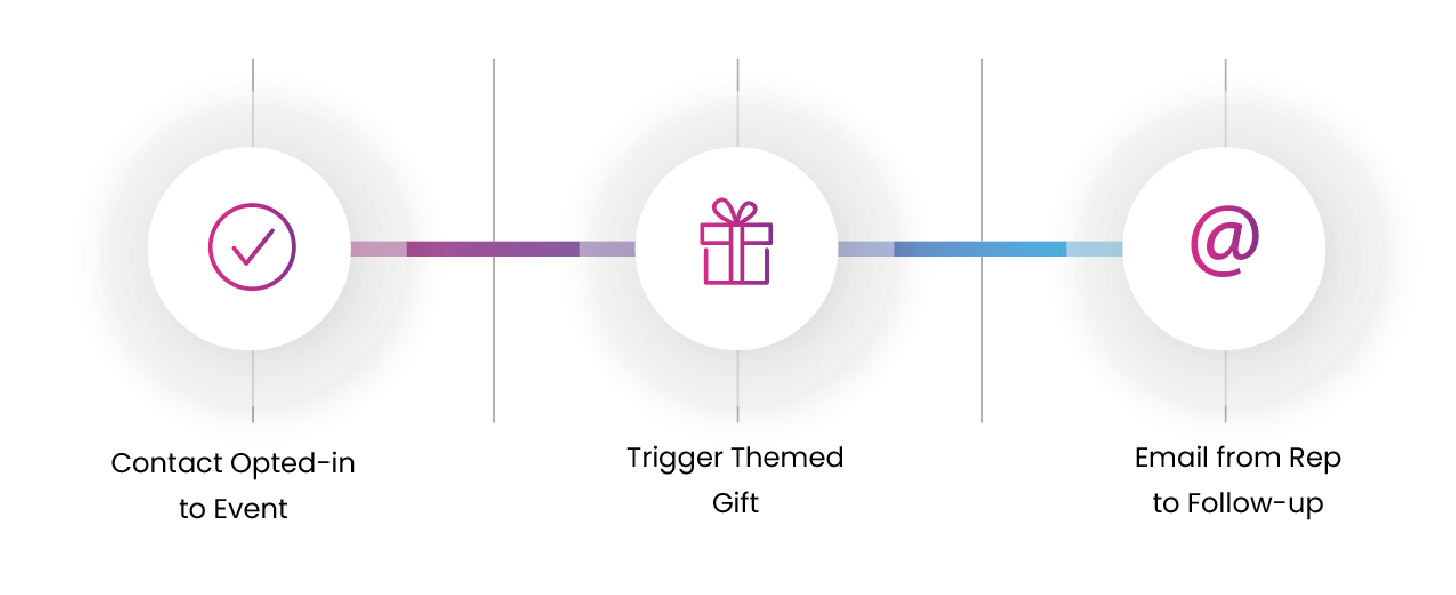
6A Appreciation
Try this: The “Appreciation” play builds relationships with your customers by acknowledging moments that matter. Show your customers you care about them personally with a gift that surprises and delights when they least expect it. Store common personal events in Salesforce, such as birthday, new puppy, new baby, promotion, etc., and allow reps to add contacts to these campaigns. You can also use phone call analytics to track and listen for these words and then trigger campaigns based on the event.
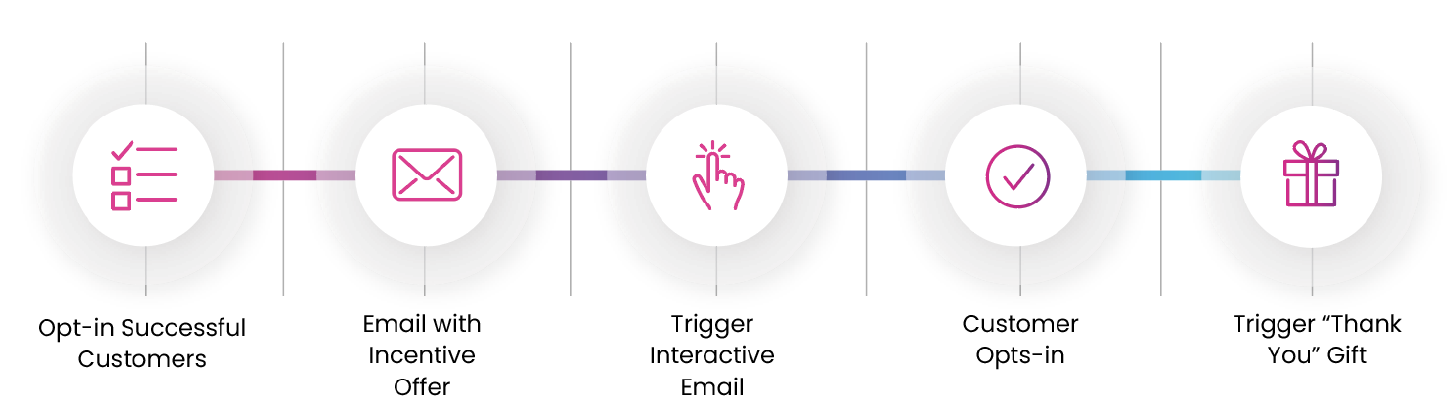
6B Word-of-Mouth
Try this: Potential customers want to know what their peers are saying about your product. To increase referrals, testimonials, case studies, or reviews, trigger a low-cost mailer with an incentive to receive a small treat or a higher value gift for taking the action. If the ask is a more personal one (such as a case study or reference), you can opt to reach out by email instead, then use PFL to trigger the “Thank You” gift.

Effective Lifecycle Strategies
Direct mail offers a multifaceted approach to engaging customers throughout their journey. By leveraging its unique attributes, direct mail enhances the customer experience, drives conversions, and strengthens brand relationships, ultimately leading to sustainable business growth.
In addition to using the plays and techniques noted above, incorporating insights from subject matter experts across industries can help you develop comprehensive and effective customer lifecycle management strategies to drive growth, retention, and advocacy. Here are some key points that experts often emphasize:
Customer Needs: Experts stress the importance of deeply understanding customer needs and preferences at each stage of the lifecycle. This involves conducting thorough market research, collecting data, and leveraging analytics to gain insights into customer behavior.
Personalization: Effective customer lifecycle management involves personalizing interactions and tailoring offerings to meet individual customer preferences. Experts advocate for segmentation strategies based on demographic, behavioral, and psychographic factors to deliver targeted and relevant experiences.
Relationships: Building long-term relationships with customers is a key aspect of lifecycle management. Experts emphasize the significance of nurturing customer loyalty through consistent engagement, exceptional service, and meaningful communication.
Communication: Engaging customers throughout their lifecycle journey is critical for retention and advocacy. Experts recommend implementing multichannel communication strategies and leveraging automation tools to maintain regular touchpoints and provide valuable content and support.
Feedback: Soliciting feedback from customers and incorporating it into product/service development and improvement processes is essential. Experts advocate for establishing feedback loops, conducting surveys, and actively listening to customer concerns to enhance satisfaction and loyalty.
Additional Revenue: Leveraging cross-selling and upselling opportunities is another aspect of effective customer lifecycle management. It’s suggested that identifying complementary products/services and using targeted marketing and personalized recommendations to drive additional revenue from existing customers makes them stickier and more likely to be retained over time.
Monitoring & Analysis: Continuous monitoring and analysis of customer lifecycle metrics are crucial for assessing performance and identifying areas for optimization. Experts stress the importance of tracking key performance indicators (KPIs), such as customer lifetime value, churn rate, and satisfaction scores to measure success and guide decision-making.
Agility & Adaptability: Finally, experts emphasize the need for agility and adaptability in responding to changing customer needs and market dynamics. Customer lifecycle management strategies should be flexible enough to accommodate shifts in consumer behavior, technological advancements, and competitive landscapes.

Conclusion
It’s clear that the most effective strategies are those that embrace the synergy between physical and virtual experiences. Direct mail, still often overlooked, emerges as a powerful tool in this fusion, transcending its traditional role and becoming a conduit for art, storytelling, information, and connection.
Direct mail, when executed with creativity and precision, can be an integral part of the customer journey. It transforms from mundane correspondence into personalized, engaging experiences that resonate with recipients. It’s not just about sending a piece of paper— it’s about forging meaningful connections and leaving a lasting impression.
In the realm of modern marketing, direct mail is no longer just mail—it’s “More Than Mail.” It’s a versatile medium that has the potential to elevate your brand, captivate your audience, and drive tangible results. So, embrace the power of direct mail, and unlock its potential to enhance every step of your customer’s journey. With modern, automated solutions, you can harness the full potential of direct mail to create memorable moments that extend far beyond the mailbox.
Presenting Speakers
Introduction
Marketing today requires more than just digital expertise. The fact is, best-practice organizations weave together both physical and virtual experiences. Modern, data-driven physical experiences can help you connect with prospects and customers more effectively; boost loyalty and brand value; and better address buyer needs throughout the customer lifecycle.
This is where direct mail becomes “More Than Mail.”
Mail is more than a postcard or a routine letter. It’s more than the coupon you receive from your favorite store, a monthly bank statement, or the note your insurance company sends on your birthday. Mail is more than sheets of folded paper in your mailbox or a package left on your doorstep.
Mail Can Be Art
Mail can be the beginning or continuation of a story. Mail can provide important information, or it can connect someone to valuable resources. Mail can educate, inform, entertain, and inspire—sometimes simultaneously. It can be a personal expression of appreciation or a way to comfort someone going through a difficult time. It can celebrate achievements and commemorate milestones. A piece of mail can occupy space in someone’s home or in a customer’s mailbox— all holding the promise of something extraordinary.
Sure, poorly done, direct mail can be impersonal, irrelevant, even junk. It can make you immediately look for the nearest recycling bin. Direct mail can be the bridge that connects your brand to your audience, driving engagement across the customer journey with memorable moments that extend beyond the mailbox.
With modern, automated direct mail, you can make every connection during the customer journey count. That is “More Than Mail."
Introducing 'More Than Mail'
“More Than Mail” is a bold challenge to the status quo of direct mail marketing. For too many, direct mail is synonymous with outdated, one-way communication that comes with complicated processes, a high cost, and an environmental toll. But, in reality, direct mail is a versatile, engaging, and dynamic force in modern marketing.
A Creative Fusion
Before getting into how it can be of value during the entire length and breadth of the customer lifecycle, it’s important to understand what direct mail is and isn’t. Modern direct mail is a creative fusion of tradition and innovation, making it a timeless medium in the digital age. It can captivate your audience, ignite conversations, and build lasting relationships. It offers the ability to experience the power of two-way engagements through personalized, interactive direct mail experiences, including QR codes, landing pages, etc.
“Modern direct mail is a creative fusion of tradition and innovation, making it a timeless medium in the digital age.”
When it comes to dollars, physical mail is extremely cost effective, offering strategies that maximize budgets while delivering exceptional results. By targeting mail to go to the right person at the right time, you can cut costs by sending less mail. What’s more, it’s easy to tap into digital data to craft tailored messages that resonate with each recipient. All of which makes direct mail not just relevant, but essential for driving results as part of your marketing mix and channels. In fact, according to recent research, 81 percent of recipients are likely to open a direct mail package, thereby increasing engagement.
What’s more, a study by the US Postal Service confirms that mail is welcomed into people’s homes and plays a unique and personal role in their daily lives (see sidebar, “The ‘Mail Moment’: Consumers Are Paying Attention.”)
And, as we are in a new era of direct mail, cutting-edge tracking and analytics provides keen insights into campaign performance. Lastly, but perhaps most important, is that PFL is committed to eco-responsibility, using sustainable printing and mailing practices that reduce the footprint of your campaigns.
The Customer Lifecycle
The “More Than Mail” approach, therefore, is one that empowers every marketer to transcend the expected and the forgettable. It’s a bridge between your brand and your audience, a catalyst for engagement, a force for change, and a way to make every connection with your audience throughout the customer lifecycle count.
Direct mail can serve as a powerful tool across every stage of the customer lifecycle, and it all begins by identifying opportunities for improvement in customer experience areas and gaps that need to be filled.
In the Awareness stage, direct mail can grab attention effectively with physical, eye-catching materials that stand out and garner attention.
Engagement can be enhanced by fostering a deeper connection than is possible through digital means alone.
Direct mail can serve as a powerful tool across every stage of the customer lifecycle, and it all begins by identifying opportunities for improvement in customer experience areas and gaps that need to be filled.
During Consideration, personalized mail can deliver tailored messages, addressing specific pain points and needs, which can nudge prospects closer to a decision.
In Conversion, direct mail can provide a tangible call to action—such as coupons or samples—prompting immediate responses and driving conversions.
Retention efforts benefit from the physical nature of direct mail, reinforcing brand recall over time and encouraging repeat purchases.
Finally, in the Loyalty phase, targeted mailings can express appreciation to existing customers, strengthening bonds, and encouraging positive reviews and referrals, ultimately fostering brand loyalty. Through each touchpoint, direct mail leverages its unique qualities to complement and enhance the customer journey, resulting in more meaningful interactions and improved outcomes.
Creating Powerful Moments
In the end though, the “More Than Mail” adventure is all about fashioning powerful and memorable experiences for your customers and prospects. Creating powerful moments was examined in detail last year in our e-book, “PFL’s Essential Guide to: Creating Powerful Direct Mail Moments Across the Customer Lifecycle.”
Coming to Life
No matter where the customer is in the journey—from reading a blog or attending an event (awareness) to becoming a true brand advocate (loyalty)—it’s necessary to include one or more of the following elements to make the “More Than Mail” scenario come to life:
Elevation:
These interactions supercharge brand recall and facilitate a smoother customer journey. They are experiences that rise above the routine and make customers and prospects feel engaged and motivated.
Insight:
Creating “insight” brings those “aha moments” to the recipients. “Moments of insight” deliver realizations and transformations that can cause people to trip over the truth. These “aha moments” can make people believers and get them to act.
Connection:
Email and text have become the main forms of communication for many—especially in business. People want personal contact to experience shared meaning. We also all want to feel acknowledged and recognized for the things we accomplish.
Celebration:
We have explored some of the myriad reasons why acknowledging and celebrating customers and prospects is crucial for businesses that want to thrive in today’s competitive landscape.
A Lifecycle of Plays
So, let’s delve a little deeper into each stage of the customer lifecycle and see exactly how direct mail can significantly impact prospects and customers at each stage:
1 Awareness
Direct mail stands out in a cluttered digital environment by offering innovative designs, textures, and formats that can captivate recipients’ attention, making your brand memorable right from the start. Better awareness can lead to a 20 to 30 percent increase in engagement. That’s why a great first impression is an essential beginning step.
Best-practice programs weave in high-impact, low-cost print materials at the top of the funnel. What’s more, organizations are now able to create moments of elevation in their messaging, while introducing true moments of insight for prospects. For instance, a creatively designed postcard or a well-crafted brochure can pique curiosity and initiate the customer journey effectively.
1A Introduce Yourself
Try this: There are many plays you can run to create awareness. One example is the “Introduce Yourself” play. Once you’ve defined your target audience, trigger interactive mail with a trackable QR code. Once your contact has engaged, and an email address is collected, drop the prospect into a nurture campaign.
1B New Movers
Try this: Spread awareness to new movers in your service area by triggering postcards with location and service information. Optimize ROI by leveraging PFL’s Audience Modeling Services to score contacts based on their propensity to convert. Once the contact engages, add them to your CRM and drop them into a nurture campaign.
2 Engagement
The physical nature of direct mail fosters a deeper connection than do digital channels. Recipients are more likely to spend time engaging with mail, flipping through pages, and examining content. This hands-on experience creates a stronger emotional connection, leading to better brand recall and message retention. For example, interactive elements such as QR codes, augmented reality, or video can further enhance engagement.
2A Thought Leadership
Try this: Thought leadership positions your brand as a subject matter expert— innovative, smart, and helpful. Use this play to send a book, industry report, or whitepaper with a personalized note to your target audience. If it can address a known pain point, all the better. Increase the funnel velocity by notifying sales reps to call and email the contact at the exact moment the package is delivered.
2B Did You Know? / Pro Tips
Try this: Providing helpful insight positions your brand as a subject matter expert and goto source for information. Use this play to provide relevant tips and ideas to your audience, and direct them to your website to learn more on a particular topic. If they visit your site, invite them to subscribe to your newsletter, follow you on social media, or download an ebook so they don’t miss out on more pro tips and insights from your company.
3 Consideration
Personalization is key during the consideration stage, and direct mail offers ample opportunities for tailored communication. By leveraging customer data and segmentation, marketers can create highly relevant mailings that address individual preferences, pain points, and aspirations. Personalized mailings can significantly influence purchase decisions and move prospects closer to conversion.
Industry leaders understand that success in the consideration stage takes educating, nurturing, and re-engaging prospects who show interest in a brand. Nothing aids in this task more than educational mailers or samples that show what a product or service is and what it can do. By tapping into moments of insight and connection, marketers can transform their efforts. Organizations that include direct mail in the consideration stage typically see a 20 to 30 percent spike in engagement.
3A Meeting Maker
Try this: For the contacts that show engagement by clicking links, downloading content, or registering for events, it’s time to ask for a meeting. You can do this a couple of ways. One option is to send a low-cost interactive mailer with an incentive to take the meeting. Another option is to send a mid-tier, dimensional mailer that creates a memorable moment of surprise and delight for the contact, so they are eager to book a meeting.
3B Nurture
Try this: Send timely, relevant content by inserting links to your brand topics within your email nurture campaign. When a prospect engages digitally with a specific topic, trigger informational print collateral, such as a booklet or a tri-fold brochure, that relates to that topic.
4 Conversion
Direct mail is a powerful driver of conversions by delivering purchase-oriented calls to action. Including incentives such as coupons, free samples, or limited-time offers invites recipients to respond immediately. Additionally, integrating direct mail with digital channels through personalized URLs (PURLs) or QR codes enables seamless online conversions, tracking, and attribution, maximizing the effectiveness of marketing campaigns.
Organizations that succeed in converting a high percentage of prospects to customers typically focus on addressing pain points and delivering incentives to act, including offering free trials, discounts, recognition, and gifts. Creating moments of connection and elevation can help marketers achieve breakthrough results. Organizations that develop effective conversion methods see a 15 to 30 percent boost in interest.
4A Sales Acceleration
Try this: Here’s a “Sales Acceleration” play that creates urgency to accelerate deals by sending sales qualified leads (SQLs) a high-impact mail er that contains a gift and a piece of content, such as a buying guide. After the prospect hits the SQL stage, trigger an email thanking them for the meeting and letting them know “something’s in the mail.” After the package has been delivered, notify sales reps to call and follow-up. Finally, drop contacts into an email nurture, with a continued cadence of follow-up calls and social engagement.
4B Abandoned Cart
Try this: Accelerate the sales cycle and entice unengaged customers who have abandoned their shopping cart by using intelligent personalization to map images of the products in their cart to a postcard. Trigger the postcard if the customer hasn’t engaged with your digital outreach. Use a trackable QR code for an incentive offer that directs the customer to finish checking out.
5 Retention
The physical nature of direct mail creates a sensory experience that leaves a lasting impression on recipients. Unlike transitory digital ads, physical mailings have a longer shelf life, often occupying physical space in homes or offices and serving as constant reminders of the brand. Sending a personalized thank-you note or exclusive offers to existing customers strengthens relationships and increases share of wallet and leads to higher customer retention.
What does best-practice customer retention look like? Key experiences include moments of connection, elevation, and celebration. An organization must re-engage on the customer’s terms, acknowledge key personal or professional milestones and achievements, offer the right incentives, and engage in other activities that enhance the relationship.
5A Customer Retention
Try this: It’s much easier to retain a customer than to find a new one. Use PFL technology to trigger timely, personalized incentive offers to increase app downloads, in-store visits, or repeat purchases. Once a customer makes a purchase, use digital retargeting ads and promotional offers to get them to engage again. For consumers who are not responding digitally, trigger a postcard with a limited-time offer to increase conversion.
5B Re-engagement
Try this: The “Re-Engagement” play increases engagement and adoption for your brand by sending a physical mailer to customers who have been non-responsive. Trigger a mid-tier mailer and send a notification task to reps to follow-up via email and phone once the package has been delivered.
5C Upsell / Cross-sell
Try this: Trigger an interactive mailer to incentivize customers who have shown interest in your other products or services to book a meeting. Incentives could be things such as receiving a more expensive gift for taking a meeting or a getting a discount on a particular product or service of interest.
6 Loyalty
Targeted mailings play a crucial role in nurturing and retaining loyal customers. By segmenting the customer base and sending relevant content and offers, brands can demonstrate appreciation and value to their most valuable customers. Creating loyal customer advocates requires a focus on moments involving connection, elevation, and celebration.
This can take many forms that span the digital and physical realms, including direct appreciation and acknowledgement, rewards related to referrals or references, soliciting reviews from loyal customers, conducting surveys, and doing product beta testing. Exclusive invitations to events, early access to new products, or personalized anniversary or birthday gifts can also all solidify loyalty and turn customers into active brand advocates loyal customers.
6A Appreciation
Try this: The “Appreciation” play builds relationships with your customers by acknowledging moments that matter. Show your customers you care about them personally with a gift that surprises and delights when they least expect it. Store common personal events in Salesforce, such as birthday, new puppy, new baby, promotion, etc., and allow reps to add contacts to these campaigns. You can also use phone call analytics to track and listen for these words and then trigger campaigns based on the event.
6B Word-of-Mouth
Try this: Potential customers want to know what their peers are saying about your product. To increase referrals, testimonials, case studies, or reviews, trigger a low-cost mailer with an incentive to receive a small treat or a higher value gift for taking the action. If the ask is a more personal one (such as a case study or reference), you can opt to reach out by email instead, then use PFL to trigger the “Thank You” gift.
Effective Lifecycle Strategies
Direct mail offers a multifaceted approach to engaging customers throughout their journey. By leveraging its unique attributes, direct mail enhances the customer experience, drives conversions, and strengthens brand relationships, ultimately leading to sustainable business growth.
In addition to using the plays and techniques noted above, incorporating insights from subject matter experts across industries can help you develop comprehensive and effective customer lifecycle management strategies to drive growth, retention, and advocacy. Here are some key points that experts often emphasize:
Customer Needs: Experts stress the importance of deeply understanding customer needs and preferences at each stage of the lifecycle. This involves conducting thorough market research, collecting data, and leveraging analytics to gain insights into customer behavior.
Personalization: Effective customer lifecycle management involves personalizing interactions and tailoring offerings to meet individual customer preferences. Experts advocate for segmentation strategies based on demographic, behavioral, and psychographic factors to deliver targeted and relevant experiences.
Relationships: Building long-term relationships with customers is a key aspect of lifecycle management. Experts emphasize the significance of nurturing customer loyalty through consistent engagement, exceptional service, and meaningful communication.
Communication: Engaging customers throughout their lifecycle journey is critical for retention and advocacy. Experts recommend implementing multichannel communication strategies and leveraging automation tools to maintain regular touchpoints and provide valuable content and support.
Feedback: Soliciting feedback from customers and incorporating it into product/service development and improvement processes is essential. Experts advocate for establishing feedback loops, conducting surveys, and actively listening to customer concerns to enhance satisfaction and loyalty.
Additional Revenue: Leveraging cross-selling and upselling opportunities is another aspect of effective customer lifecycle management. It’s suggested that identifying complementary products/services and using targeted marketing and personalized recommendations to drive additional revenue from existing customers makes them stickier and more likely to be retained over time.
Monitoring & Analysis: Continuous monitoring and analysis of customer lifecycle metrics are crucial for assessing performance and identifying areas for optimization. Experts stress the importance of tracking key performance indicators (KPIs), such as customer lifetime value, churn rate, and satisfaction scores to measure success and guide decision-making.
Agility & Adaptability: Finally, experts emphasize the need for agility and adaptability in responding to changing customer needs and market dynamics. Customer lifecycle management strategies should be flexible enough to accommodate shifts in consumer behavior, technological advancements, and competitive landscapes.
Conclusion
It’s clear that the most effective strategies are those that embrace the synergy between physical and virtual experiences. Direct mail, still often overlooked, emerges as a powerful tool in this fusion, transcending its traditional role and becoming a conduit for art, storytelling, information, and connection.
Direct mail, when executed with creativity and precision, can be an integral part of the customer journey. It transforms from mundane correspondence into personalized, engaging experiences that resonate with recipients. It’s not just about sending a piece of paper— it’s about forging meaningful connections and leaving a lasting impression.
In the realm of modern marketing, direct mail is no longer just mail—it’s “More Than Mail.” It’s a versatile medium that has the potential to elevate your brand, captivate your audience, and drive tangible results. So, embrace the power of direct mail, and unlock its potential to enhance every step of your customer’s journey. With modern, automated solutions, you can harness the full potential of direct mail to create memorable moments that extend far beyond the mailbox.
Introduction
Marketing today requires more than just digital expertise. The fact is, best-practice organizations weave together both physical and virtual experiences. Modern, data-driven physical experiences can help you connect with prospects and customers more effectively; boost loyalty and brand value; and better address buyer needs throughout the customer lifecycle.
This is where direct mail becomes “More Than Mail.”
Mail is more than a postcard or a routine letter. It’s more than the coupon you receive from your favorite store, a monthly bank statement, or the note your insurance company sends on your birthday. Mail is more than sheets of folded paper in your mailbox or a package left on your doorstep.
Mail Can Be Art
Mail can be the beginning or continuation of a story. Mail can provide important information, or it can connect someone to valuable resources. Mail can educate, inform, entertain, and inspire—sometimes simultaneously. It can be a personal expression of appreciation or a way to comfort someone going through a difficult time. It can celebrate achievements and commemorate milestones. A piece of mail can occupy space in someone’s home or in a customer’s mailbox— all holding the promise of something extraordinary.
Sure, poorly done, direct mail can be impersonal, irrelevant, even junk. It can make you immediately look for the nearest recycling bin. Direct mail can be the bridge that connects your brand to your audience, driving engagement across the customer journey with memorable moments that extend beyond the mailbox.
With modern, automated direct mail, you can make every connection during the customer journey count. That is “More Than Mail."
Introducing 'More Than Mail'
“More Than Mail” is a bold challenge to the status quo of direct mail marketing. For too many, direct mail is synonymous with outdated, one-way communication that comes with complicated processes, a high cost, and an environmental toll. But, in reality, direct mail is a versatile, engaging, and dynamic force in modern marketing.
A Creative Fusion
Before getting into how it can be of value during the entire length and breadth of the customer lifecycle, it’s important to understand what direct mail is and isn’t. Modern direct mail is a creative fusion of tradition and innovation, making it a timeless medium in the digital age. It can captivate your audience, ignite conversations, and build lasting relationships. It offers the ability to experience the power of two-way engagements through personalized, interactive direct mail experiences, including QR codes, landing pages, etc.
“Modern direct mail is a creative fusion of tradition and innovation, making it a timeless medium in the digital age.”
When it comes to dollars, physical mail is extremely cost effective, offering strategies that maximize budgets while delivering exceptional results. By targeting mail to go to the right person at the right time, you can cut costs by sending less mail. What’s more, it’s easy to tap into digital data to craft tailored messages that resonate with each recipient. All of which makes direct mail not just relevant, but essential for driving results as part of your marketing mix and channels. In fact, according to recent research, 81 percent of recipients are likely to open a direct mail package, thereby increasing engagement.
What’s more, a study by the US Postal Service confirms that mail is welcomed into people’s homes and plays a unique and personal role in their daily lives (see sidebar, “The ‘Mail Moment’: Consumers Are Paying Attention.”)
And, as we are in a new era of direct mail, cutting-edge tracking and analytics provides keen insights into campaign performance. Lastly, but perhaps most important, is that PFL is committed to eco-responsibility, using sustainable printing and mailing practices that reduce the footprint of your campaigns.
The Customer Lifecycle
The “More Than Mail” approach, therefore, is one that empowers every marketer to transcend the expected and the forgettable. It’s a bridge between your brand and your audience, a catalyst for engagement, a force for change, and a way to make every connection with your audience throughout the customer lifecycle count.
Direct mail can serve as a powerful tool across every stage of the customer lifecycle, and it all begins by identifying opportunities for improvement in customer experience areas and gaps that need to be filled.
In the Awareness stage, direct mail can grab attention effectively with physical, eye-catching materials that stand out and garner attention.
Engagement can be enhanced by fostering a deeper connection than is possible through digital means alone.
Direct mail can serve as a powerful tool across every stage of the customer lifecycle, and it all begins by identifying opportunities for improvement in customer experience areas and gaps that need to be filled.
During Consideration, personalized mail can deliver tailored messages, addressing specific pain points and needs, which can nudge prospects closer to a decision.
In Conversion, direct mail can provide a tangible call to action—such as coupons or samples—prompting immediate responses and driving conversions.
Retention efforts benefit from the physical nature of direct mail, reinforcing brand recall over time and encouraging repeat purchases.
Finally, in the Loyalty phase, targeted mailings can express appreciation to existing customers, strengthening bonds, and encouraging positive reviews and referrals, ultimately fostering brand loyalty. Through each touchpoint, direct mail leverages its unique qualities to complement and enhance the customer journey, resulting in more meaningful interactions and improved outcomes.
Creating Powerful Moments
In the end though, the “More Than Mail” adventure is all about fashioning powerful and memorable experiences for your customers and prospects. Creating powerful moments was examined in detail last year in our e-book, “PFL’s Essential Guide to: Creating Powerful Direct Mail Moments Across the Customer Lifecycle.”
Coming to Life
No matter where the customer is in the journey—from reading a blog or attending an event (awareness) to becoming a true brand advocate (loyalty)—it’s necessary to include one or more of the following elements to make the “More Than Mail” scenario come to life:
Elevation:
These interactions supercharge brand recall and facilitate a smoother customer journey. They are experiences that rise above the routine and make customers and prospects feel engaged and motivated.
Insight:
Creating “insight” brings those “aha moments” to the recipients. “Moments of insight” deliver realizations and transformations that can cause people to trip over the truth. These “aha moments” can make people believers and get them to act.
Connection:
Email and text have become the main forms of communication for many—especially in business. People want personal contact to experience shared meaning. We also all want to feel acknowledged and recognized for the things we accomplish.
Celebration:
We have explored some of the myriad reasons why acknowledging and celebrating customers and prospects is crucial for businesses that want to thrive in today’s competitive landscape.
A Lifecycle of Plays
So, let’s delve a little deeper into each stage of the customer lifecycle and see exactly how direct mail can significantly impact prospects and customers at each stage:
1 Awareness
Direct mail stands out in a cluttered digital environment by offering innovative designs, textures, and formats that can captivate recipients’ attention, making your brand memorable right from the start. Better awareness can lead to a 20 to 30 percent increase in engagement. That’s why a great first impression is an essential beginning step.
Best-practice programs weave in high-impact, low-cost print materials at the top of the funnel. What’s more, organizations are now able to create moments of elevation in their messaging, while introducing true moments of insight for prospects. For instance, a creatively designed postcard or a well-crafted brochure can pique curiosity and initiate the customer journey effectively.
1A Introduce Yourself
Try this: There are many plays you can run to create awareness. One example is the “Introduce Yourself” play. Once you’ve defined your target audience, trigger interactive mail with a trackable QR code. Once your contact has engaged, and an email address is collected, drop the prospect into a nurture campaign.
1B New Movers
Try this: Spread awareness to new movers in your service area by triggering postcards with location and service information. Optimize ROI by leveraging PFL’s Audience Modeling Services to score contacts based on their propensity to convert. Once the contact engages, add them to your CRM and drop them into a nurture campaign.
2 Engagement
The physical nature of direct mail fosters a deeper connection than do digital channels. Recipients are more likely to spend time engaging with mail, flipping through pages, and examining content. This hands-on experience creates a stronger emotional connection, leading to better brand recall and message retention. For example, interactive elements such as QR codes, augmented reality, or video can further enhance engagement.
2A Thought Leadership
Try this: Thought leadership positions your brand as a subject matter expert— innovative, smart, and helpful. Use this play to send a book, industry report, or whitepaper with a personalized note to your target audience. If it can address a known pain point, all the better. Increase the funnel velocity by notifying sales reps to call and email the contact at the exact moment the package is delivered.
2B Did You Know? / Pro Tips
Try this: Providing helpful insight positions your brand as a subject matter expert and goto source for information. Use this play to provide relevant tips and ideas to your audience, and direct them to your website to learn more on a particular topic. If they visit your site, invite them to subscribe to your newsletter, follow you on social media, or download an ebook so they don’t miss out on more pro tips and insights from your company.
3 Consideration
Personalization is key during the consideration stage, and direct mail offers ample opportunities for tailored communication. By leveraging customer data and segmentation, marketers can create highly relevant mailings that address individual preferences, pain points, and aspirations. Personalized mailings can significantly influence purchase decisions and move prospects closer to conversion.
Industry leaders understand that success in the consideration stage takes educating, nurturing, and re-engaging prospects who show interest in a brand. Nothing aids in this task more than educational mailers or samples that show what a product or service is and what it can do. By tapping into moments of insight and connection, marketers can transform their efforts. Organizations that include direct mail in the consideration stage typically see a 20 to 30 percent spike in engagement.
3A Meeting Maker
Try this: For the contacts that show engagement by clicking links, downloading content, or registering for events, it’s time to ask for a meeting. You can do this a couple of ways. One option is to send a low-cost interactive mailer with an incentive to take the meeting. Another option is to send a mid-tier, dimensional mailer that creates a memorable moment of surprise and delight for the contact, so they are eager to book a meeting.
3B Nurture
Try this: Send timely, relevant content by inserting links to your brand topics within your email nurture campaign. When a prospect engages digitally with a specific topic, trigger informational print collateral, such as a booklet or a tri-fold brochure, that relates to that topic.
4 Conversion
Direct mail is a powerful driver of conversions by delivering purchase-oriented calls to action. Including incentives such as coupons, free samples, or limited-time offers invites recipients to respond immediately. Additionally, integrating direct mail with digital channels through personalized URLs (PURLs) or QR codes enables seamless online conversions, tracking, and attribution, maximizing the effectiveness of marketing campaigns.
Organizations that succeed in converting a high percentage of prospects to customers typically focus on addressing pain points and delivering incentives to act, including offering free trials, discounts, recognition, and gifts. Creating moments of connection and elevation can help marketers achieve breakthrough results. Organizations that develop effective conversion methods see a 15 to 30 percent boost in interest.
4A Sales Acceleration
Try this: Here’s a “Sales Acceleration” play that creates urgency to accelerate deals by sending sales qualified leads (SQLs) a high-impact mail er that contains a gift and a piece of content, such as a buying guide. After the prospect hits the SQL stage, trigger an email thanking them for the meeting and letting them know “something’s in the mail.” After the package has been delivered, notify sales reps to call and follow-up. Finally, drop contacts into an email nurture, with a continued cadence of follow-up calls and social engagement.
4B Abandoned Cart
Try this: Accelerate the sales cycle and entice unengaged customers who have abandoned their shopping cart by using intelligent personalization to map images of the products in their cart to a postcard. Trigger the postcard if the customer hasn’t engaged with your digital outreach. Use a trackable QR code for an incentive offer that directs the customer to finish checking out.
5 Retention
The physical nature of direct mail creates a sensory experience that leaves a lasting impression on recipients. Unlike transitory digital ads, physical mailings have a longer shelf life, often occupying physical space in homes or offices and serving as constant reminders of the brand. Sending a personalized thank-you note or exclusive offers to existing customers strengthens relationships and increases share of wallet and leads to higher customer retention.
What does best-practice customer retention look like? Key experiences include moments of connection, elevation, and celebration. An organization must re-engage on the customer’s terms, acknowledge key personal or professional milestones and achievements, offer the right incentives, and engage in other activities that enhance the relationship.
5A Customer Retention
Try this: It’s much easier to retain a customer than to find a new one. Use PFL technology to trigger timely, personalized incentive offers to increase app downloads, in-store visits, or repeat purchases. Once a customer makes a purchase, use digital retargeting ads and promotional offers to get them to engage again. For consumers who are not responding digitally, trigger a postcard with a limited-time offer to increase conversion.
5B Re-engagement
Try this: The “Re-Engagement” play increases engagement and adoption for your brand by sending a physical mailer to customers who have been non-responsive. Trigger a mid-tier mailer and send a notification task to reps to follow-up via email and phone once the package has been delivered.
5C Upsell / Cross-sell
Try this: Trigger an interactive mailer to incentivize customers who have shown interest in your other products or services to book a meeting. Incentives could be things such as receiving a more expensive gift for taking a meeting or a getting a discount on a particular product or service of interest.
6 Loyalty
Targeted mailings play a crucial role in nurturing and retaining loyal customers. By segmenting the customer base and sending relevant content and offers, brands can demonstrate appreciation and value to their most valuable customers. Creating loyal customer advocates requires a focus on moments involving connection, elevation, and celebration.
This can take many forms that span the digital and physical realms, including direct appreciation and acknowledgement, rewards related to referrals or references, soliciting reviews from loyal customers, conducting surveys, and doing product beta testing. Exclusive invitations to events, early access to new products, or personalized anniversary or birthday gifts can also all solidify loyalty and turn customers into active brand advocates loyal customers.
6A Appreciation
Try this: The “Appreciation” play builds relationships with your customers by acknowledging moments that matter. Show your customers you care about them personally with a gift that surprises and delights when they least expect it. Store common personal events in Salesforce, such as birthday, new puppy, new baby, promotion, etc., and allow reps to add contacts to these campaigns. You can also use phone call analytics to track and listen for these words and then trigger campaigns based on the event.
6B Word-of-Mouth
Try this: Potential customers want to know what their peers are saying about your product. To increase referrals, testimonials, case studies, or reviews, trigger a low-cost mailer with an incentive to receive a small treat or a higher value gift for taking the action. If the ask is a more personal one (such as a case study or reference), you can opt to reach out by email instead, then use PFL to trigger the “Thank You” gift.
Effective Lifecycle Strategies
Direct mail offers a multifaceted approach to engaging customers throughout their journey. By leveraging its unique attributes, direct mail enhances the customer experience, drives conversions, and strengthens brand relationships, ultimately leading to sustainable business growth.
In addition to using the plays and techniques noted above, incorporating insights from subject matter experts across industries can help you develop comprehensive and effective customer lifecycle management strategies to drive growth, retention, and advocacy. Here are some key points that experts often emphasize:
Customer Needs: Experts stress the importance of deeply understanding customer needs and preferences at each stage of the lifecycle. This involves conducting thorough market research, collecting data, and leveraging analytics to gain insights into customer behavior.
Personalization: Effective customer lifecycle management involves personalizing interactions and tailoring offerings to meet individual customer preferences. Experts advocate for segmentation strategies based on demographic, behavioral, and psychographic factors to deliver targeted and relevant experiences.
Relationships: Building long-term relationships with customers is a key aspect of lifecycle management. Experts emphasize the significance of nurturing customer loyalty through consistent engagement, exceptional service, and meaningful communication.
Communication: Engaging customers throughout their lifecycle journey is critical for retention and advocacy. Experts recommend implementing multichannel communication strategies and leveraging automation tools to maintain regular touchpoints and provide valuable content and support.
Feedback: Soliciting feedback from customers and incorporating it into product/service development and improvement processes is essential. Experts advocate for establishing feedback loops, conducting surveys, and actively listening to customer concerns to enhance satisfaction and loyalty.
Additional Revenue: Leveraging cross-selling and upselling opportunities is another aspect of effective customer lifecycle management. It’s suggested that identifying complementary products/services and using targeted marketing and personalized recommendations to drive additional revenue from existing customers makes them stickier and more likely to be retained over time.
Monitoring & Analysis: Continuous monitoring and analysis of customer lifecycle metrics are crucial for assessing performance and identifying areas for optimization. Experts stress the importance of tracking key performance indicators (KPIs), such as customer lifetime value, churn rate, and satisfaction scores to measure success and guide decision-making.
Agility & Adaptability: Finally, experts emphasize the need for agility and adaptability in responding to changing customer needs and market dynamics. Customer lifecycle management strategies should be flexible enough to accommodate shifts in consumer behavior, technological advancements, and competitive landscapes.
Conclusion
It’s clear that the most effective strategies are those that embrace the synergy between physical and virtual experiences. Direct mail, still often overlooked, emerges as a powerful tool in this fusion, transcending its traditional role and becoming a conduit for art, storytelling, information, and connection.
Direct mail, when executed with creativity and precision, can be an integral part of the customer journey. It transforms from mundane correspondence into personalized, engaging experiences that resonate with recipients. It’s not just about sending a piece of paper— it’s about forging meaningful connections and leaving a lasting impression.
In the realm of modern marketing, direct mail is no longer just mail—it’s “More Than Mail.” It’s a versatile medium that has the potential to elevate your brand, captivate your audience, and drive tangible results. So, embrace the power of direct mail, and unlock its potential to enhance every step of your customer’s journey. With modern, automated solutions, you can harness the full potential of direct mail to create memorable moments that extend far beyond the mailbox.
Thousands of Marketers Have Increased Engagement and ROI with PFL’s Direct Mail Automation Platform





PFL is easy to set up and executes direct mail campaigns for us at scale. No more complicated spreadsheets or sending sales on a journey to find their tracking numbers.
Verified PFL User in Financial Services
Thanks to PFL’s expertise and support, we have seen mailer performance improve 100% + year-over-year. We think of them as an extension of our team.
Verified PFL User in Hospital and HealthCare
Automated direct mail made easy! PFL enabled us to create more robust multi-channel campaigns with attention-grabbing direct mail items.
Verified PFL user in Hospital and HealthCare